2026 Top Industrial 3D Printers What Are the Best Options Available?
The rapid growth of additive manufacturing has transformed the industrial landscape. 3D Printer Industrial technology is improving every year, leading to innovative solutions across various sectors. In 2026, businesses seek to upgrade their production capabilities. Choosing the right industrial 3D printer is crucial for success.
Selecting the best options requires careful consideration. Factors like speed, material compatibility, and overall cost matter. A printer that fits one company’s needs may not suit another's. This creates a challenge for many organizations navigating the options. It’s essential to weigh these aspects against production goals.
Moreover, the market is filled with choices, from established brands to newcomers. Each has strengths and limitations that must be understood. Industry leaders share insights on trends and personal experiences, aiding in the decision-making process. Despite advances, there remains uncertainty in settling on the best 3D printer industrial solution. Staying updated with expert opinions is vital for informed decisions.

Overview of Industrial 3D Printing Technology in 2026
In 2026, industrial 3D printing technology continues to evolve rapidly. The market has reached an estimated value of $12 billion, showcasing a clear demand for advanced solutions across various sectors. This growth is fueled by the increasing need for customized manufacturing. Industries like aerospace and healthcare are particularly benefiting from these innovations.
Current research indicates that additive manufacturing can reduce material waste by up to 70%. This efficiency appeals to companies aiming for sustainable practices. However, challenges remain. The complexity of materials and the need for skillful operation often hinder wider adoption. Training programs for technicians are crucial to overcoming these obstacles.
Moreover, advancements in software for design automation are improving accuracy. This helps in producing intricate structures that traditional methods struggle to achieve. Despite these benefits, not all organizations find the transition easy. Many face hesitance due to initial setup costs and integration issues within existing workflows. The balance between innovation and practicality remains a critical point of reflection for the industry.
Industrial 3D Printers Market Share in 2026
This chart illustrates the projected market share of different industrial 3D printing technologies in 2026. The data shows how various technologies are expected to perform in terms of market penetration and adoption rates.
Key Features to Consider When Choosing an Industrial 3D Printer
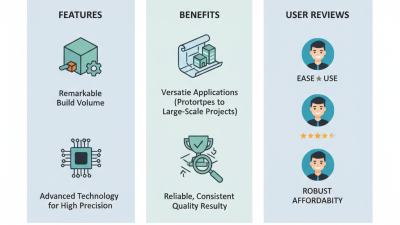
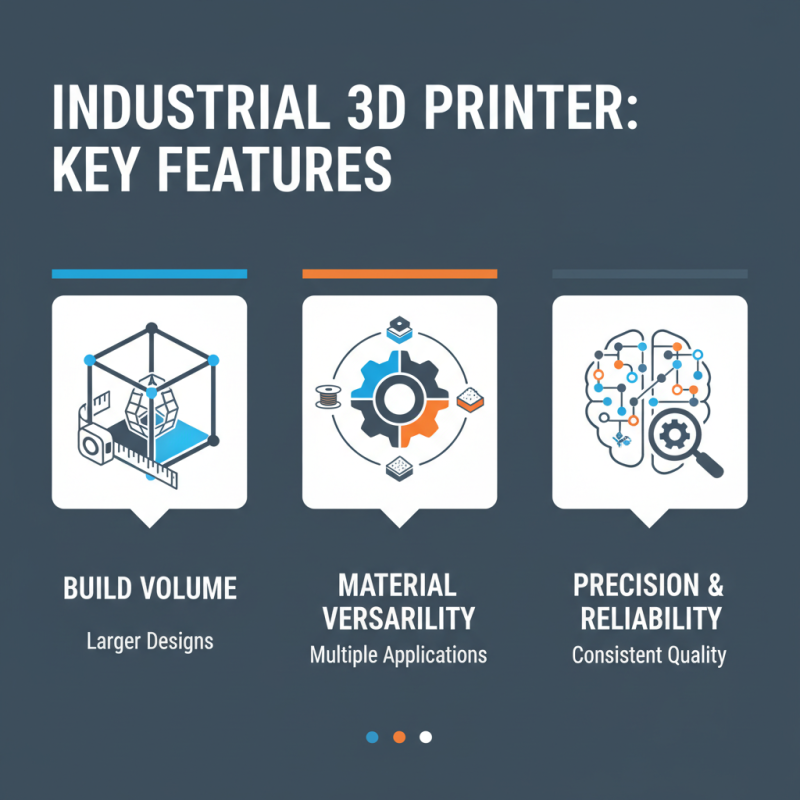
When selecting an industrial 3D printer, several key features play a crucial role in your decision-making. The build volume is a primary consideration; larger volumes allow for greater and more complex designs. Material versatility is also essential, as different applications may require specific materials. A printer that can handle multiple materials provides flexibility for innovation.
Print speed greatly impacts efficiency. Faster printers benefit production timelines, especially in a competitive market. However, speed should not sacrifice print quality. Balancing these factors can be challenging. Some industries may prioritize speed, while others may focus on detail and accuracy, reflecting a need for thoughtful assessment.
Tips: Always consider the printer’s maintenance requirements. Regular upkeep is necessary to ensure longevity. Don't forget about software compatibility. A user-friendly interface enhances operational efficiency and reduces errors. When evaluating options, reflect on past projects. What worked? What didn’t? Understanding these variables can guide your choice effectively.
Top Brands and Models of Industrial 3D Printers for 2026
As we look toward 2026, the landscape of industrial 3D printing is rapidly evolving. Several top brands are emerging as leaders, each offering unique models that cater to diverse industrial needs. Recent reports indicate that the market is expected to reach a staggering $45 billion by 2026, highlighting the critical role of additive manufacturing in various sectors. This growth showcases a seamless blend of speed, quality, and cost efficiency, key factors for many manufacturers.
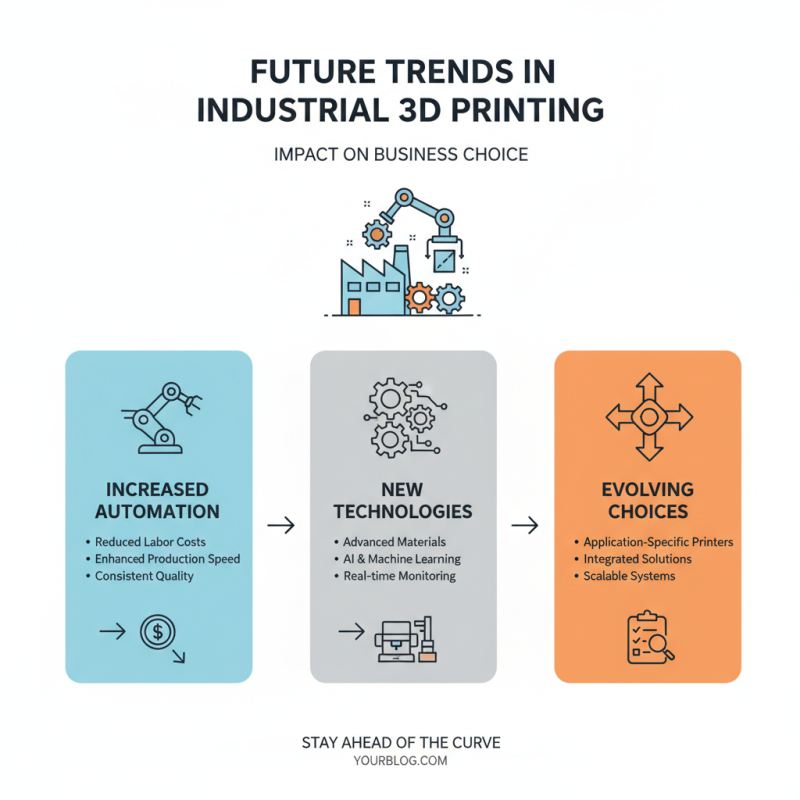
Among the notable advancements, additive manufacturing technologies are becoming more integrated with AI and IoT solutions. These integrations allow for real-time monitoring and adjustments during the printing process. Advanced materials such as high-performance polymers and metal composites are also gaining traction, providing enhanced durability and functionality. The challenge remains for users to ensure that these innovations can scale effectively in their production lines.
Moreover, sustainability is a pressing concern. Many companies are striving to reduce waste and energy consumption. Some models are designed to recycle materials, yet they may come with performance trade-offs. This raises questions about balancing eco-friendliness with operational efficiency. It's clear that while the options for industrial 3D printers in 2026 are expanding, careful evaluation and adaptation will be essential for success in this competitive landscape.
Comparative Analysis of Performance and Costs of Leading Printers
In the rapidly evolving world of industrial 3D printing, performance and cost are critical factors. A comparative analysis reveals that high-end printers excel in speed and precision. However, they also come with higher initial investments. Many businesses struggle to balance these elements effectively. Understanding your specific needs is essential.
Consider focusing on your production volume and material costs. Some printers may offer lower prices but have higher operating costs. Take time to analyze your long-term needs. This will guide you to make more informed decisions.
When evaluating options, think about post-processing requirements. Some printers need extensive finishing treatments. This can add hidden costs to your projects. Tip: Create a detailed comparison chart. Include specs like build volume, speed, and material compatibility. Such clarity can help you identify the best fit for your company.
2026 Top Industrial 3D Printers - Comparative Analysis of Performance and Costs of Leading Printers
| Printer Model |
Max Build Volume (mm) |
Layer Resolution (μm) |
Print Speed (mm/s) |
Material Compatibility |
Estimated Price (USD) |
| Model A |
500 x 500 x 600 |
50 |
200 |
PLA, ABS, Nylon |
$50,000 |
| Model B |
400 x 400 x 500 |
25 |
150 |
TPU, PETG |
$40,000 |
| Model C |
600 x 600 x 800 |
100 |
180 |
Carbon Fiber, ABS |
$70,000 |
| Model D |
300 x 300 x 400 |
75 |
140 |
PLA, ASA |
$30,000 |