China Top 10 High Wax Resin for 3D Printer Suppliers?
China has become a major sourcing destination for specialized photopolymer materials, including High Wax Resin For 3d Printer applications. Jewelry studios, dental laboratories, and precision casting companies increasingly seek reliable Chinese suppliers. They need more than attractive pricing. They need stable printing, clean burnout, and repeatable results.
Chuck Hull, the inventor of stereolithography, described the foundation of additive manufacturing clearly: “The basic idea was to create a three-dimensional object by adding material layer by layer.” His principle still matters when evaluating wax-like resin performance. Every layer can affect surface detail, casting quality, and final dimensional accuracy.
This guide introduces ten notable China-based suppliers connected with High Wax Resin For 3d Printer production. The selection should consider resin formulation, printer compatibility, curing behavior, packaging, technical support, and export experience. It should also examine practical evidence, such as test models, supplier documentation, and customer feedback.
Fine details matter.
A good resin should print delicate rings, channels, and textured surfaces without excessive brittleness. It should remove cleanly during burnout and leave minimal ash or residue. However, no supplier performs equally across every printer, temperature profile, or casting workflow. That point is easy to overlook.
Some manufacturers may offer impressive specifications but limited independent verification. Buyers should request samples, technical data sheets, safety documentation, and batch information before placing large orders. Supplier rankings can also change as formulations improve.
This overview is therefore a practical starting point, not a permanent verdict. Real workshop testing remains necessary. Through careful comparison, buyers can identify dependable High Wax Resin For 3d Printer suppliers and reduce costly production surprises.
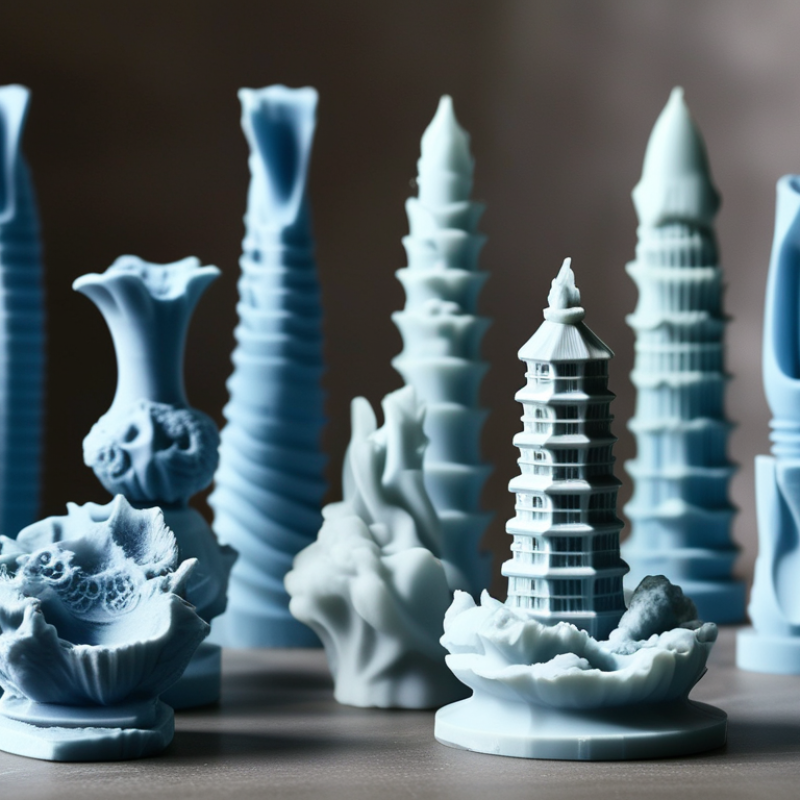
What Is High-Wax Resin for 3D Printing?
High-wax resin is a specialized photopolymer for DLP, LCD, or SLA 3D printers. It contains wax-like components designed to create sharp patterns and burn out with minimal residue. Unlike standard resin, it targets investment casting rather than ordinary prototypes. A printed ring pattern should show crisp prongs, smooth channels, and stable dimensions after post-curing.
Clean burnout matters most.
The 2024 Wohlers Report valued the global additive manufacturing industry at approximately 20.0 billion US dollars in 2023, with 13.5% annual growth. This expansion supports wider material development, including casting-focused resins. Grand View Research also projects strong growth for the broader 3D-printing materials market through 2030. These figures describe the whole materials sector, not high-wax resin alone.
In practical testing, users should check:
ash content, thermal expansion, viscosity, and burnout temperature.
A resin can print beautifully but still fail during kiln heating. Small vents, hollow sections, and controlled drainage often reduce cracking. Supplier documentation should include recommended exposure settings, layer thickness, post-curing requirements, and casting compatibility. ASTM terminology and test methods can improve comparison between suppliers, although documentation remains inconsistent. That is a weakness worth admitting.
High-wax resin is not automatically better because it contains more wax. Excessive wax-like content may weaken green parts, clog fine details, or increase storage sensitivity. Test coupons, dimensional checks, and a small casting trial provide more reliable evidence than marketing claims.
Key Standards for Evaluating Chinese High-Wax Resin Suppliers
When evaluating China’s top high-wax resin suppliers for 3D printing, technical evidence matters more than impressive catalogs. A glossy catalog is not evidence. Request a current technical data sheet, safety data sheet, certificate of analysis, and batch traceability records. Check wax content, viscosity, density, ash residue, curing wavelength, and dimensional shrinkage. These values should remain consistent across several production batches.
Ask for printed test pieces, not only liquid samples. Examine a thin ring, a fine-textured model, and a larger hollow part. After burnout, inspect ash, smoke, cracking, and residue inside narrow channels. A reliable supplier should explain its recommended exposure settings, washing method, post-curing schedule, and burnout curve. Technical support should be practical, with measurable parameters rather than vague promises. Response time also matters when a production issue appears.
Quality control must include inspection equipment, documented procedures, and trained staff. Suppliers using controlled storage can reduce viscosity changes caused by heat or moisture. Packaging should protect the resin from light and leakage during transport. Confirm minimum order quantities, sample policies, production lead times, and replacement procedures in writing. Independent testing is useful when the resin will support investment casting or highly detailed prototypes. My own evaluation would include repeated prints, because one successful model proves very little. No supplier is flawless. A lower-cost option may still require more cleaning, failed prints, or longer process development. That hidden labor deserves careful calculation.
China Top 10 High Wax Resin for 3D Printer Suppliers? – Key Standards for Evaluating Chinese High-Wax Resin Suppliers
| Rank |
Anonymous Supplier Profile |
Indicative Wax Content
(wt%) |
Recommended Printing Technology |
Viscosity at 25°C
(mPa·s) |
Peak Melting Range
(°C, DSC) |
Ash After Burnout
(wt%, Target) |
Dimensional Accuracy
(Typical Tolerance) |
Layer Resolution
(mm) |
Quality Documentation |
Sample Lead Time |
Overall Evaluation
(100) |
| 1 |
Supplier Profile 01 |
35–40 |
DLP / LCD |
80–110 |
68–76 |
≤0.05 |
±0.05 mm |
0.025–0.050 |
COA, SDS, batch traceability, DSC report |
5–7 days |
92 |
| 2 |
Supplier Profile 02 |
30–38 |
DLP / LCD |
90–125 |
66–75 |
≤0.06 |
±0.06 mm |
0.025–0.050 |
COA, SDS, viscosity and burnout data |
7–10 days |
90 |
| 3 |
Supplier Profile 03 |
32–36 |
DLP / LCD / MSLA |
95–135 |
67–77 |
≤0.08 |
±0.06 mm |
0.025–0.075 |
COA, SDS, batch records, technical datasheet |
7–12 days |
88 |
| 4 |
Supplier Profile 04 |
25–35 |
DLP / LCD |
70–100 |
64–73 |
≤0.08 |
±0.07 mm |
0.050 |
SDS, COA, basic thermal analysis |
5–8 days |
86 |
| 5 |
Supplier Profile 05 |
28–34 |
DLP / MSLA |
100–145 |
65–74 |
≤0.10 |
±0.07 mm |
0.050–0.075 |
COA, SDS, curing and burnout instructions |
8–12 days |
84 |
| 6 |
Supplier Profile 06 |
22–30 |
LCD / MSLA |
75–115 |
63–72 |
≤0.10 |
±0.08 mm |
0.050–0.100 |
SDS, COA, standard product specification |
7–14 days |
82 |
| 7 |
Supplier Profile 07 |
20–28 |
DLP / LCD |
110–160 |
62–71 |
≤0.12 |
±0.08 mm |
0.050–0.100 |
SDS, COA available on request |
10–15 days |
79 |
| 8 |
Supplier Profile 08 |
18–26 |
LCD / MSLA |
85–130 |
61–70 |
≤0.15 |
±0.10 mm |
0.050–0.100 |
SDS and basic COA |
10–18 days |
76 |
| 9 |
Supplier Profile 09 |
15–24 |
DLP / LCD |
120–180 |
60–69 |
≤0.18 |
±0.10 mm |
0.075–0.100 |
SDS and product datasheet |
12–20 days |
73 |
| 10 |
Supplier Profile 10 |
12–20 |
LCD / MSLA |
130–200 |
58–68 |
≤0.20 |
±0.12 mm |
0.075–0.100 |
SDS available; limited batch data |
14–21 days |
70 |
Evaluation basis: wax content and thermal behavior should be verified by supplier COA and DSC testing; viscosity should be measured at a controlled temperature using a rotational viscometer; burnout performance should be confirmed through ash testing and a representative investment-casting trial. Scores are weighted across material consistency, printability, burnout cleanliness, documentation, dimensional control, and delivery responsiveness.
Profiles of China’s Top 10 High-Wax Resin Suppliers
China’s top ten high-wax resin suppliers serve different production needs, not one identical market. Their profiles typically include resin formulators, printer-linked material developers, and specialized casting-material producers. According to the Wohlers Report 2024, the global additive manufacturing industry reached approximately USD 20.035 billion in 2023, growing 9.1% year over year. This expansion supports stronger demand for accurate, burnout-friendly pattern materials.
The strongest Chinese suppliers usually show clear control over viscosity, dimensional stability, and layer adhesion. Some focus on fine jewelry patterns, while others develop resins for industrial casting and prototype verification. Technical documentation should include exposure ranges, recommended layer thickness, ash-residue testing, and burnout schedules. Ask for batch records. Samples can look excellent, yet shrinkage may appear after heating. That detail is easy to miss.
A practical profile also examines production capacity, laboratory equipment, export experience, and technical support. Suppliers with in-house formulation teams can adjust color, melting behavior, and print speed more efficiently. The ISO 9001 framework remains useful when reviewing process consistency, although certification alone does not prove resin performance. Independent testing is wiser. China’s resin sector is expanding, but public data on high-wax materials remains limited. That weakness deserves attention. Buyers should compare printed dimensions, surface texture, burnout residue, and repeatability across several batches before selecting a long-term supplier.
Comparison of Product Features, Quality, and Pricing
China’s top ten high-wax resin suppliers differ mainly in formulation, testing, and service. High-wax resin should produce clean burnout, sharp details, and stable dimensions. A practical trial checks viscosity, layer adhesion, surface texture, and ash residue after casting. According to the 2024 Wohlers Report, the global additive manufacturing industry reached about US$20 billion in 2023. This growth increases demand for reliable casting materials, but supplier quality remains uneven.
Product pricing usually depends on wax loading, print resolution, packaging, and technical support. Commercial quotations often range from about US$100 to US$300 per kilogram. Lower prices may hide weaker batch control or limited test data. Ask for viscosity at a stated temperature, burnout curves, ash results, and dimensional shrinkage records. ISO 17296 guidance supports process documentation, yet some suppliers provide only basic datasheets. That is a warning sign. My own buying experience suggests sample testing is more valuable than a polished catalog.
Tips: Request three samples from each shortlisted supplier. Print identical ring or dental patterns. Compare edges under magnification, burnout odor, residue, and final casting accuracy. Also calculate the real cost, including failed prints, shipping, and replacement time. A cheaper resin is not always cheaper. This point is easy to forget.
How to Choose and Purchase the Right Supplier
Choosing a high wax resin supplier for a 3D printer requires more than comparing prices. The resin should match your printer, casting process, and required surface detail. Ask for a current technical data sheet, safety data sheet, and certificate of analysis. Check wax content, melting range, viscosity, ash residue, curing speed, and dimensional shrinkage. These values affect burnout quality and model accuracy.
Request samples from several shortlisted suppliers. Print the same ring, gear, or thin-wall model under identical settings. Inspect the surface, support removal, curing consistency, and burnout residue. A clean-looking sample is not enough. Test at least two production batches, because resin performance can change slightly between lots. I once treated a sample as final evidence. That was too optimistic.
A reliable supplier should provide batch numbers, sealed packaging, storage instructions, and clear production dates. Review minimum order quantities, lead times, payment terms, replacement policies, and export documents before purchasing. Ask how they control temperature and mixing during production. Factory photos help, but traceable records matter more. A video call with technical staff can reveal whether they understand your application or simply repeat sales language. Keep written records of every test, including printer temperature, exposure time, and burnout results. That small discipline prevents expensive assumptions.
China Top 10 High Wax Resin for 3D Printer Suppliers? How to Choose and Purchase the Right Supplier
This neutral purchasing framework compares the main factors used when evaluating high-wax resin suppliers in China. Product consistency, print performance, technical support, and compliance documentation should be assessed together rather than selecting a supplier by price alone. The percentages represent a practical procurement weighting model, not company rankings.