2026 How to Choose the Best 3D Color Printer for Your Needs?
Choosing the right 3D color printer can be daunting. With many options available, it's easy to feel overwhelmed. This guide will help you navigate the choices.
When selecting a 3D color printer, consider your needs. Are you a hobbyist or a professional? Each category has different requirements. Some printers excel at detail, while others prioritize speed.
Budget is another crucial factor. High-quality printers can be expensive. However, cheaper options may compromise quality. Think about how much you are willing to invest. Remember, finding the perfect 3D color printer isn't just about the price. It’s also about the features that truly matter to you. Take your time to reflect on what you need.
Understanding the Different Types of 3D Color Printers Available Today
When exploring 3D color printers, it’s crucial to understand the types available. The most common are FDM, resin, and powder-based printers.
FDM printers use thermoplastic filaments and are popular for creating sturdy prototypes. They are often user-friendly and relatively affordable. However, the color detail can be lacking in some cases.
Resin printers produce stunningly detailed models with rich colors. They use liquid resin cured by UV light. The process is delicate and can require more patience. Cleaning and post-processing can be messy and time-consuming. It’s essential to assess your comfort level with these aspects.
Powder-based printers offer unique color possibilities through a binding agent. They can produce complex geometries and vibrant hues. However, the initial setup and maintenance could be challenging for beginners. It’s important to consider the long-term costs and skills needed for each type. Each printer type has its strengths and drawbacks, so reflect on what aligns best with your goals.
Key Features to Consider When Choosing a 3D Color Printer
When selecting a 3D color printer, key features matter greatly. Print quality is essential. Look for printers that can deliver high-resolution results. Fine detail matters, especially for complex models. The material compatibility is another critical aspect. Different printers support various filament types. Ensure your choice can handle the materials you plan to use.
Consider the size and speed of the printer. Larger build volumes allow for bigger projects. However, speed can be a double-edged sword. Faster prints may compromise quality. It's vital to find a balance. User-friendliness is another factor. An intuitive interface can save you time but may require some learning curves. Don't overlook support and community resources for troubleshooting.
Remember, no printer is perfect. You might face limitations with color accuracy or material choices. Reflect on your specific needs and project types. Experimentation can lead to unexpected results. In the end, choosing the right printer is about aligning features with your creative goals.
Assessing Your Specific Printing Needs and Project Requirements
When choosing a 3D color printer, it's crucial to assess your specific printing needs. Ask yourself what materials you plan to use. Different printers excel with various types of filament. Some may only handle basic plastics, while others can print with flexible or composite materials. Knowing this can save time and frustration.
Consider the scale of your projects. Are you creating small prototypes or large models? The printer's build volume plays a significant role. Larger projects need more space. But be mindful—bigger printers may require more maintenance. A smaller unit might fit your needs better if you're just starting.
Also, think about the level of detail you require. Some projects demand high resolution, while others prioritize speed. You might find that balancing these factors isn't easy. Evaluate your priorities carefully. You may need to compromise between quality and efficiency. Reflect on what matters most to your work.
Comparison of 3D Printer Features for Different Needs
Budgeting for a 3D Color Printer: Costs and Long-term Expenses
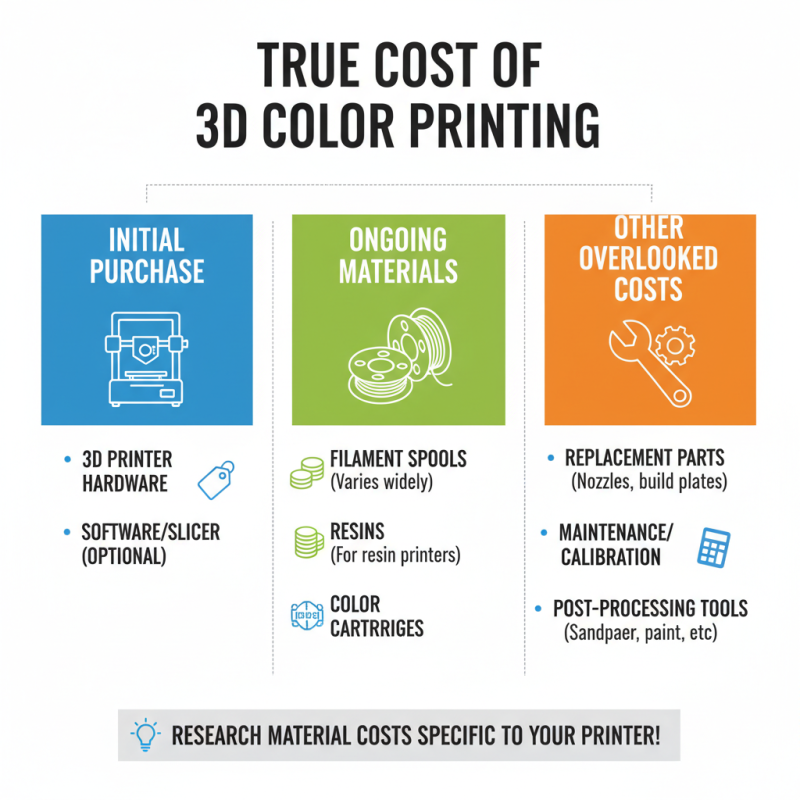
Budgeting for a 3D color printer involves more than just the initial purchase price. Many people overlook ongoing costs. These can add up quickly and may surprise new users. Filament costs, for example, vary widely. Some materials are cheaper, while others can be pricey. Make sure you research the average cost of materials specific to your printer.
Maintenance is another aspect to consider. Regular upkeep is vital for optimal performance. This might include cleaning or replacing nozzles. These small expenses can accumulate. Additionally, consider the costs associated with software. Some programs come with licenses. Others offer features that may not be necessary for your projects.
Think about your long-term needs. Are you planning to create intricate models or simple designs? The kind of work you'll do influences your printer choice. A more expensive printer might be an investment. However, if your projects are minimal, a lower-cost option might suffice. Always revisit your budget throughout the process. Adjust based on new insights or changing needs. Balancing initial costs with long-term expenses ensures you make a sound investment in your 3D printing journey.
Exploring User Reviews and Brand Reputation in 3D Printing
When selecting a 3D color printer, user reviews play a crucial role. They offer insights that technical specs may not cover. Potential buyers often scan online forums for feedback. After all, real experiences provide context to claims made by manufacturers. Yet, opinions can vary widely. One user's dream printer might be another's worst nightmare. It's vital to consider these differences seriously.
Brand reputation is another key factor in the decision-making process. A company with a long history may seem more reliable. However, emerging brands often surprise everyone with innovative features. These new players might have better pricing, too. Still, their customer support could be hit or miss. Users sometimes report delays in responses or lack of solutions. This inconsistency can lead to frustration for buyers looking for help.
While reviews and reputation offer valuable information, personal needs should lead your choice. Some users prioritize speed, while others focus on versatility. Balancing these aspects is not always easy. Reading between the lines of reviews is also essential. What may seem like a minor issue to one person might be a deal-breaker for another. Make sure to reflect on what truly matters for your 3D printing journey.