10 Essential Tips for Choosing Water Washable 3D Printer Resin?
In the rapidly evolving world of 3D printing, selecting the right material is crucial. Water Washable 3D Printer Resin has emerged as a popular choice among enthusiasts and professionals alike. This resin simplifies the post-processing phase, making it easier to clean prints without harsh chemicals.
Expert Mark Young, a leading authority in the field, states, “Water Washable 3D Printer Resins make the printing process more accessible to everyone.” His insight highlights a growing trend where convenience meets quality. However, not all water wash resins are created equal. Factors such as curing time, print resolution, and durability play a vital role in the selection process.
As users dive into this topic, they must carefully consider their specific needs. Testing different brands can yield varying results. It’s easy to overlook the importance of quality in pursuit of convenience. Understanding the nuances of Water Washable 3D Printer Resin is essential for achieving the best printing outcomes.

Understanding Water Washable Resins: Key Features and Benefits
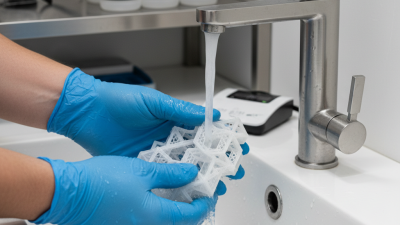
Water washable resins have gained popularity among 3D printing enthusiasts for their unique features and benefits. One of the key advantages is their easy cleanup process. With these resins, you can wash prints with just water, eliminating the need for harsh chemicals. This is not only more convenient but also better for the environment. Many users appreciate that they can safely dispose of the wash water without concerns of harmful impacts.
Moreover, water washable resins often maintain excellent print quality. They can produce fine details and smooth finishes, making them ideal for intricate projects. Users have observed that these resins exhibit good adhesion to the build plate, reducing the likelihood of failed prints. However, it’s worth noting that some may find their properties differ from traditional resins. Adjusting to a water washable resin might require experimentation and practice. You might face challenges with curing times or finish quality, which can frustrate newcomers.
Understanding the right curing process is crucial. Each resin can vary, and missteps can affect the final result. While water soluble options are user-friendly, they aren’t always without issues. Users have reported instances of tackiness or weak points in prints, highlighting the need for thorough research and testing. It’s essential to balance convenience with performance when choosing materials. This way, you can achieve quality outcomes without compromising your workflow.
Assessing Print Quality: What to Look for in Resin Performance
When assessing print quality in water washable 3D printer resin, consider the characteristics of the material. Look for clarity and color consistency. A transparent resin can help determine how light interacts with the printed object. Uneven coloration may indicate issues in the mixing process or poor-quality ingredients.
Print resolution is another vital aspect. Check the layer adhesion and surface smoothness. High-quality resin should provide clean, crisp details without obvious lines between layers. Pay attention to the curing time; some resins cure too quickly or slowly, affecting the final quality.
While testing, you may notice imperfections. Small bubbles or surface irregularities can arise, highlighting the importance of proper post-processing. These flaws offer a chance to refine techniques and improve your results. Embrace experimentation and learn from each print to enhance your overall experience with 3D resin printing.
3D Printer Resin Performance Assessment
This chart displays the performance metrics of various water-washable 3D printer resins, focusing on key aspects such as print quality, ease of washing, and curing time.
Safety First: Evaluating Toxicity and Handling Requirements
When selecting water-washable 3D printer resin, safety should be a top priority. Many resins can emit harmful fumes or irritants. Always check the Safety Data Sheet (SDS). It provides crucial information on toxicity levels and handling precautions. Understanding these details can reduce risks during use. It’s essential to work in a well-ventilated area while using resin. This practice helps limit exposure to any potentially harmful particles or vapors.
Handling resin requires protective gear. Wear gloves, goggles, and a mask during the entire process. This protects against skin irritation and accidental inhalation. After printing, the resin must be cleaned properly. Using water to wash the prints can minimize harmful waste. However, remember that post-processing areas must also be kept clean and ventilated. Thoroughly disposing of any leftover resin safely is equally crucial. It’s often overlooked but can be detrimental to the environment if mishandled.
Knowing the potential hazards of 3D printing materials is vital. Regularly reviewing safety practices enhances overall experience. It's not just about the product quality. It’s also about ensuring a safe workspace. Take time to educate yourself and stay informed on best practices. Safety in the workshop is an ongoing commitment, requiring constant reflection.
Cost Considerations: Budgeting for Your 3D Printing Projects
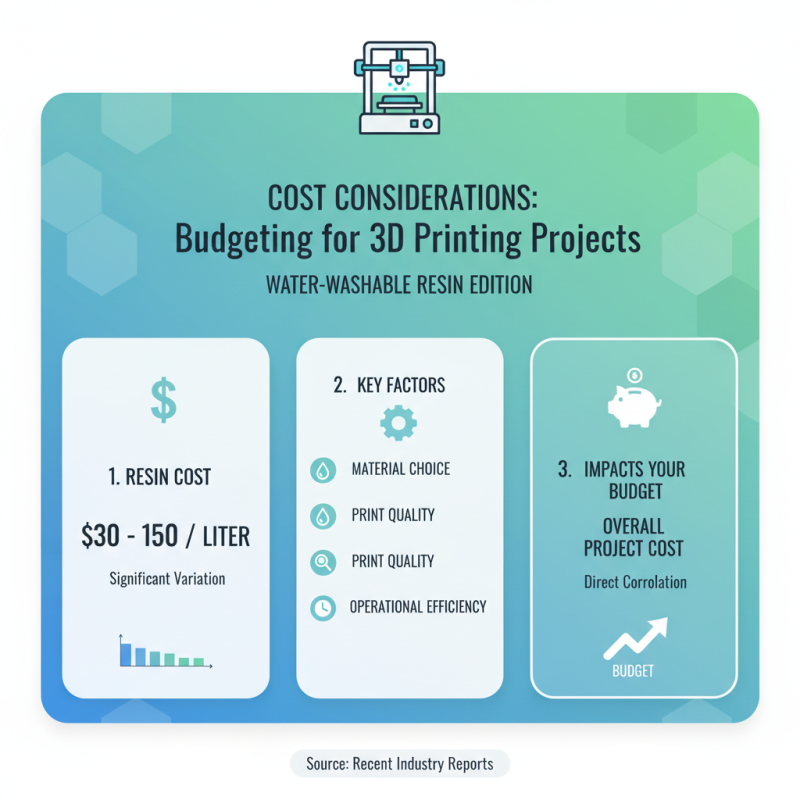
When budgeting for 3D printing projects, especially with water washable resin, it’s crucial to consider multiple factors. According to recent industry reports, resin costs can range from $30 to $150 per liter. This variation can significantly impact your overall budget. The choice of resin directly affects print quality and operational efficiency.
In addition to raw materials, equipment costs also add up. A reliable water washable 3D printer may cost anywhere from $200 to $2,000. Analyze your printing needs carefully. Lower-end models might save money upfront but could lead to frequent repairs. Assessing total ownership costs is vital for long-term budgeting.
Don’t overlook post-processing expenses. Cleaning stations, gloves, and safety gear are often necessary. Additional costs can accumulate quickly. It's essential to maintain a balance between quality and affordability. Research shows that 40% of 3D printing projects exceed their initial budget. Pre-planning can help mitigate this risk. Understanding these financial aspects is key for successful projects.
Compatibility Check: Ensuring Resin Works with Your Printer Model
When selecting water washable 3D printer resin, the compatibility with your specific printer model is paramount. Not all resins are formulated the same way. Industry reports indicate that many users face issues due to mismatched resins, leading to failed prints. Always check the resin specifications; they must align with your printer’s type and settings.
It’s important to understand how different resins interact with your printer’s hardware. Look for resin that offers optimal viscosity and curing parameters recommended for your model. Keep in mind, the wrong choice can result in print distortions or even clogs. Misalignment can waste time and material, which is a common pitfall in 3D printing.
When evaluating options, consider testing small quantities first. This avoids large-scale waste should the resin not perform as expected. Seek feedback from reputable sources or 3D printing communities online. They often share their experiences, offering transparent insights into effective products. Always remember, the right resin can lead to smoother operation and better results.
10 Essential Tips for Choosing Water Washable 3D Printer Resin
| Tip |
Description |
Compatibility Checkpoints |
| 1. Check Printer Specifications |
Ensure your printer's compatibility with water washable resin. |
Verify material compatibility guides provided by the printer manufacturer. |
| 2. Review UV Wavelength |
Different resins cure at specific UV wavelengths. |
Match resin UV specifications with printer's light source. |
| 3. Look for Viscosity |
Resin viscosity affects print quality and flow. |
Ensure viscosity is suitable for your printer's resin tank. |
| 4. Choose Resin for Detail |
Some resins are better for fine details than others. |
Select resin recommended for high-resolution prints. |
| 5. Check Curing Time |
Curing time can vary significantly between different resins. |
Refer to specific curing time instructions per resin type. |
| 6. Consider Strength and Durability |
Different applications may require different strength levels. |
Analyze user feedback on strength for your intended use. |
| 7. Assess Color Options |
Water washable resins come in various colors. |
Ensure color selection aligns with project requirements. |
| 8. Evaluate Smell and Safety |
Some resins have a strong odor or safety concerns. |
Look for low-odor and non-toxic options. |
| 9. Review Printability |
Some resins may lead to print failures more frequently. |
Consult online forums for user experiences. |
| 10. Check Cost Effectiveness |
Prices can range widely between different resins. |
Balance quality and cost based on your budget. |