2026 How to Choose the Best Dental 3D Printer for Your Needs?
In the ever-evolving field of dentistry, choosing the right Dental 3D Printer plays a crucial role. With various models available, it can be overwhelming to make an informed decision. Quality and precision are paramount in dental applications, as they directly affect patient care.
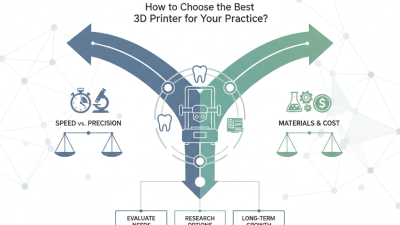
When selecting a Dental 3D Printer, understanding your specific needs is vital. Consider aspects like print speed, build size, and material compatibility. Each feature can impact your workflow and efficiency.
It's easy to overlook these details. Many practitioners might feel pressured to choose a popular brand without thorough research. However, evaluating your unique requirements will ultimately lead to better outcomes. A well-chosen Dental 3D Printer not only enhances productivity but also elevates the standard of care you provide.
Understanding the Dental 3D Printing Landscape
Understanding the dental 3D printing landscape is crucial for professionals in the field. As technology advances, different printers emerge, each with unique strengths. This variety can be overwhelming. It's essential to match printer features to specific dental needs.
When considering a printer, think about material compatibility. Different printers work with various resins and filaments. Test small samples to ensure the quality meets your expectations. Not every printer is suitable for every application. Some excel in creating dental models, while others might be better for surgical guides.
Tips: Analyze your workload. High-demand practices may benefit from faster models. Assess your budget, but remember that cheaper isn't always better. When testing printers, pay attention to their ease of use. Complicated setups can waste precious time.
Embrace the learning curve, but also reflect on how well a printer fits into your existing workflow.
Stay informed about industry trends. Educational resources and forums can provide insight on the latest innovations. Networking with peers can also reveal valuable opinions. In this fast-evolving landscape, adaptability is key. Investing the time to understand these dynamics will ultimately enhance service quality.
Key Factors to Consider When Choosing a Dental 3D Printer
Choosing the right dental 3D printer requires careful consideration of several key factors. First, assess the printer’s technology. Different types exist, like SLA and DLP. Each has unique benefits and drawbacks. Understanding the process will help you decide which technology suits your practice best.
Next, think about the speed and volume of production. A printer that offers higher throughput may be essential for a busy dental office. Evaluate how much time you can save in your workflow. Efficiency directly impacts your service quality and patient satisfaction.
Tips: Look for user feedback. Online reviews can provide insights into real-world performance. Understand that not every printer meets everyone’s needs. Some issues may arise during operation, so readiness to adapt is crucial. Also, consider software compatibility. A system that integrates smoothly with your existing tools can save you significant headaches.
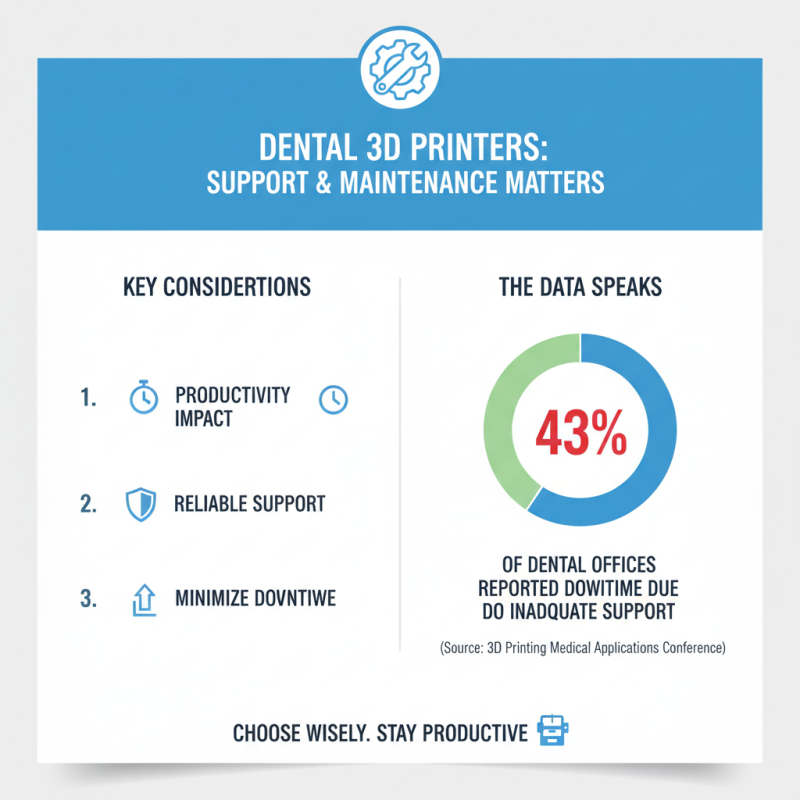
Lastly, budget is vital. Lower-cost options are available, but they may not provide the best results. Think about the long-term investment. Quality often outweighs initial savings. Consider ongoing support and maintenance when evaluating potential printers. Remember, taking time to reflect on these aspects can lead to better choices.
2026 How to Choose the Best Dental 3D Printer for Your Needs? - Key Factors to Consider When Choosing a Dental 3D Printer
| Factor |
Importance |
Considerations |
Examples |
| Print Quality |
High |
Resolution, layer thickness |
Fine detail models |
| Materials |
Medium |
Types of resins available |
Biocompatible resins |
| Speed |
Medium |
Print time per model |
Rapid prototyping |
| User-Friendly Interface |
High |
Ease of operation |
Touchscreen controls |
| Support and Maintenance |
High |
Warranty and service options |
On-site support options |
| Cost |
Medium |
Initial investment and running costs |
Affordable entry-level options |
| Printing Volume |
Medium |
Size of models that can be printed |
Large dental appliances |
Types of Dental 3D Printers and Their Applications
When selecting a dental 3D printer, understanding the types available is crucial. The market offers various options, each designed for specific applications. For instance, SLA (Stereolithography) printers excel in creating detailed dental models. A report from the Institute of Medical Technology forecasts that SLA technology will grow by 35% annually.
DLP (Digital Light Processing) printers, on the other hand, are known for their speed. They produce high-quality prints in less time. This can greatly benefit practices needing rapid prototyping. Recent findings highlight that DLP printers can reduce production time by up to 40% compared to traditional methods.
Tips: Assess your specific needs carefully. Evaluate the volume of work and detail required. Consider the initial investment alongside long-term costs. Research shows that practices using in-house 3D printing save up to 50% on outsourcing dental models. However, remember that investing in high-resolution technology may initially strain budgets.
Understanding these technologies is vital but not foolproof. Every printer has its limitations. For instance, while DLP offers speed, it might trade off on resolution. Assessing your unique requirements will help you find the best fit for your dental practice's growth.
Assessing Cost vs. Quality in Dental 3D Printing
As the dental industry evolves, choosing a
3D printer involves careful consideration of cost and quality. Recent data from
the International Association for Dental Research highlights that 3D printing can reduce production times by up to
70%. However, lower-cost machines may compromise on accuracy and durability, leading to potential long-term costs.
Quality dental 3D printers utilize advanced materials that can boost efficiency. According to a survey by Statista, nearly
65% of dental professionals prioritize print resolution over initial cost. Cheaper printers may require frequent calibration,
resulting in wasted materials and increased operational costs. Investing in a reliable machine can lead to significant savings over time.
It’s also critical to assess
support and training. Many cost-effective printers offer limited educational resources. This lack of support
can hinder a team's proficiency with the technology. Choosing a printer purely based on price may result in learning curves that outweigh initial savings.
Balancing upfront costs with long-term benefits is essential for successful integration into dental practices.