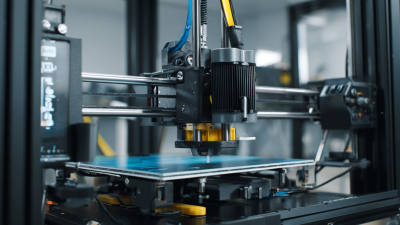
Top 10 Best 3D Printer Filaments for Amazing Prints in 2023
In the ever-evolving world of 3D printing, the quality of your output greatly depends on the materials you choose to work with. Among these, 3D printer filaments play a crucial role in determining not only the aesthetics but also the durability of your printed models. As we move into 2023, the variety of 3D printer filaments available on the market has expanded significantly, each offering unique properties suited for different applications. Whether you're a seasoned professional or a hobbyist, understanding the best options can elevate your printing experience and results.
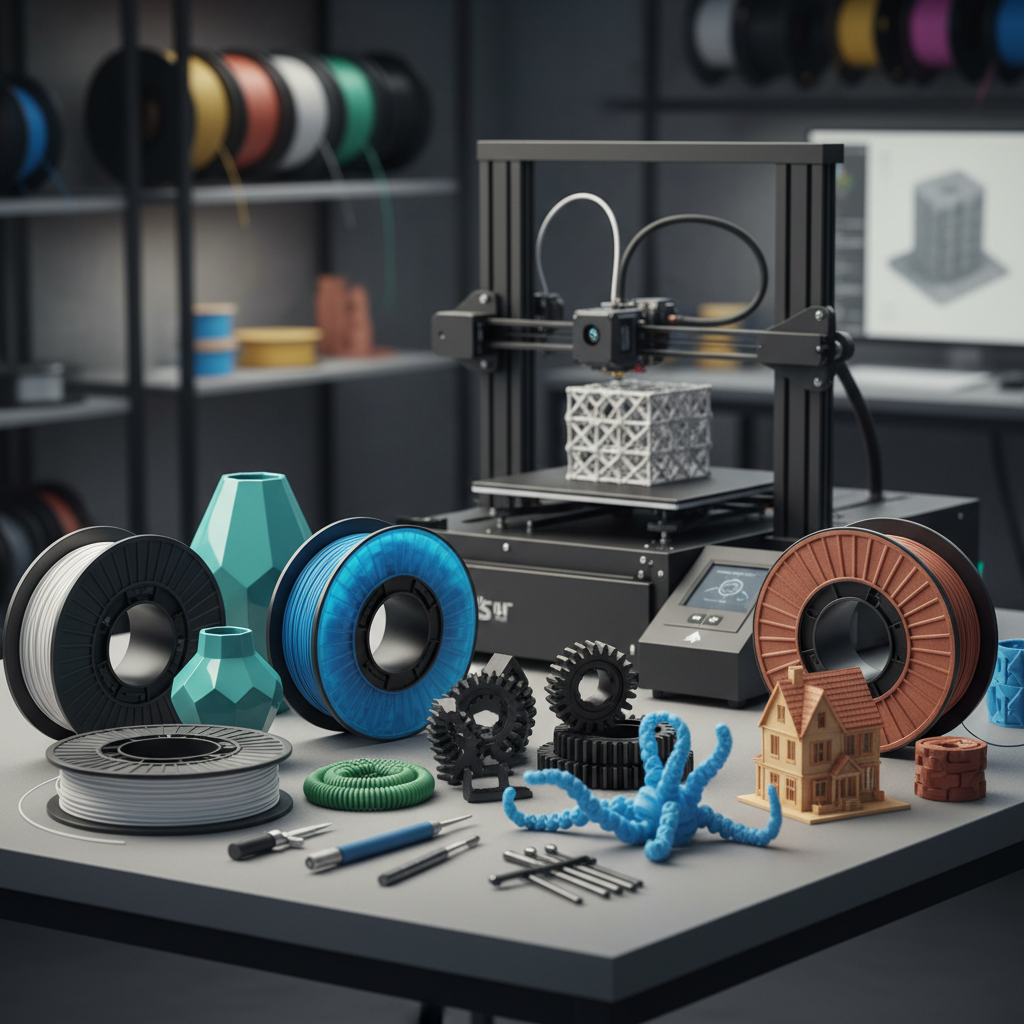
This guide presents the top 10 best 3D printer filaments for 2023, providing insights into their features, advantages, and ideal use cases. From versatile PLA to robust ASA and flexible TPU, each filament has its strengths, making it essential to choose the right one for your specific project. By exploring these top-of-the-line options, you can ensure that your 3D prints not only look amazing but also meet the functional requirements of your designs. Join us as we delve into the world of 3D printer filaments and uncover the best materials to enhance your 3D printing journey this year.
Overview of 3D Printing Filaments in 2023
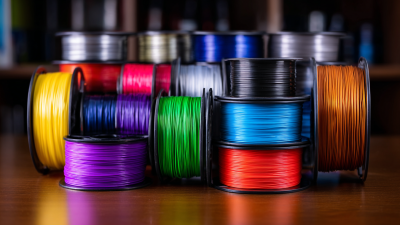
In 2023, the landscape of 3D printing filaments has evolved significantly, offering enthusiasts a wide range of materials to choose from. Each filament type comes with its unique properties, making it crucial to select the right one for your specific printing needs. From sturdy ABS to flexible TPU, and eco-friendly PLA, understanding these materials helps you achieve the best results for any project. Advances in filament technology have also enhanced ease of use, allowing users to print with higher precision and efficiency than ever before.
When selecting a filament, consider the intended application of your print. For functional parts, ABS or PETG might be ideal due to their durability and heat resistance. If your project requires intricate details, materials like PLA can provide excellent surface quality.
Tip: Always check the recommended temperature settings for each filament type, as improper settings can lead to warping or poor adhesion. Additionally, experimenting with different brands can sometimes yield better results, as not all filaments are created equal. Don’t forget to store your filaments in a cool, dry place to prevent moisture absorption, which can negatively affect print quality.
Criteria for Selecting the Best 3D Printer Filaments
When selecting the best 3D printer filaments, several criteria should be taken into account. First, consider the filament material's compatibility with your 3D printer model. Common options like PLA, ABS, and PETG each require specific temperature settings and printing environments. Ensuring your printer can handle the material will save time and prevent issues during the printing process.
Another key factor is print quality and ease of use. For beginners, filaments like PLA are ideal due to their forgiving nature and lower warping tendencies. On the other hand, advanced users may explore more complex materials such as Nylon or TPU for specialized projects.
Tip: Always read reviews and look for recommendations within the 3D printing community to gauge others' experiences with specific filaments. Additionally, consider conducting a small test print with a new filament before committing to larger projects, as this can help identify any potential issues with adhesion or extruder settings.
Top 10 3D Printer Filaments for Quality and Versatility
When selecting the best 3D printer filaments for quality and versatility, it's crucial to consider the material's properties and the types of prints you plan to create. Filaments such as PLA are immensely popular due to their ease of use, vibrant colors, and ability to produce detailed prints. Conversely, ABS offers greater durability and flexibility but may require a higher temperature and a well-ventilated area. Selecting the right filament can drastically influence the success of your print projects.
Tips: Always store your filaments in a cool, dry place to prevent moisture absorption, which can compromise print quality. Additionally, experimenting with different filament brands may help you find the perfect combination that suits your specific printer setup and project requirements. Don’t hesitate to read reviews and user experiences to better understand how different filaments perform in various conditions.
For those looking for versatility, materials like PETG and TPU stand out. PETG combines the best of both worlds between PLA and ABS, offering strength and ease of printing, while TPU excels in flexibility, making it ideal for printing parts that require elastic properties. Understanding your project’s needs will help you make informed choices about which filament will yield the best results.
Top 10 Best 3D Printer Filaments for Amazing Prints in 2023
| Filament Type |
Diameter (mm) |
Material Properties |
Print Temperature (°C) |
Key Features |
| PLA |
1.75 |
Biodegradable, easy to print |
180-220 |
Great for beginners, low warping |
| ABS |
1.75 |
Strong, high temperature resistance |
210-250 |
Ideal for functional prints |
| PETG |
1.75 |
Durable, chemical resistant |
220-250 |
Flexible yet strong |
| TPU |
1.75 |
Flexible, rubber-like |
220-240 |
Excellent for soft objects |
| ASA |
1.75 |
UV resistant |
240-260 |
Ideal for outdoor use |
| HIPS |
1.75 |
Lightweight, easy to sand |
220-240 |
Great for support structures |
| Nylon |
1.75 |
Strong, flexible |
240-260 |
Ideal for durable prints |
| PC |
1.75 |
Heat-resistant, tough |
250-290 |
For industrial applications |
| PVA |
1.75 |
Water-soluble |
180-210 |
Perfect for supports |
| Wood Filament |
1.75 |
Natural wood fibers |
190-220 |
For wood-like finish |
Comparative Analysis of Filament Properties and Uses
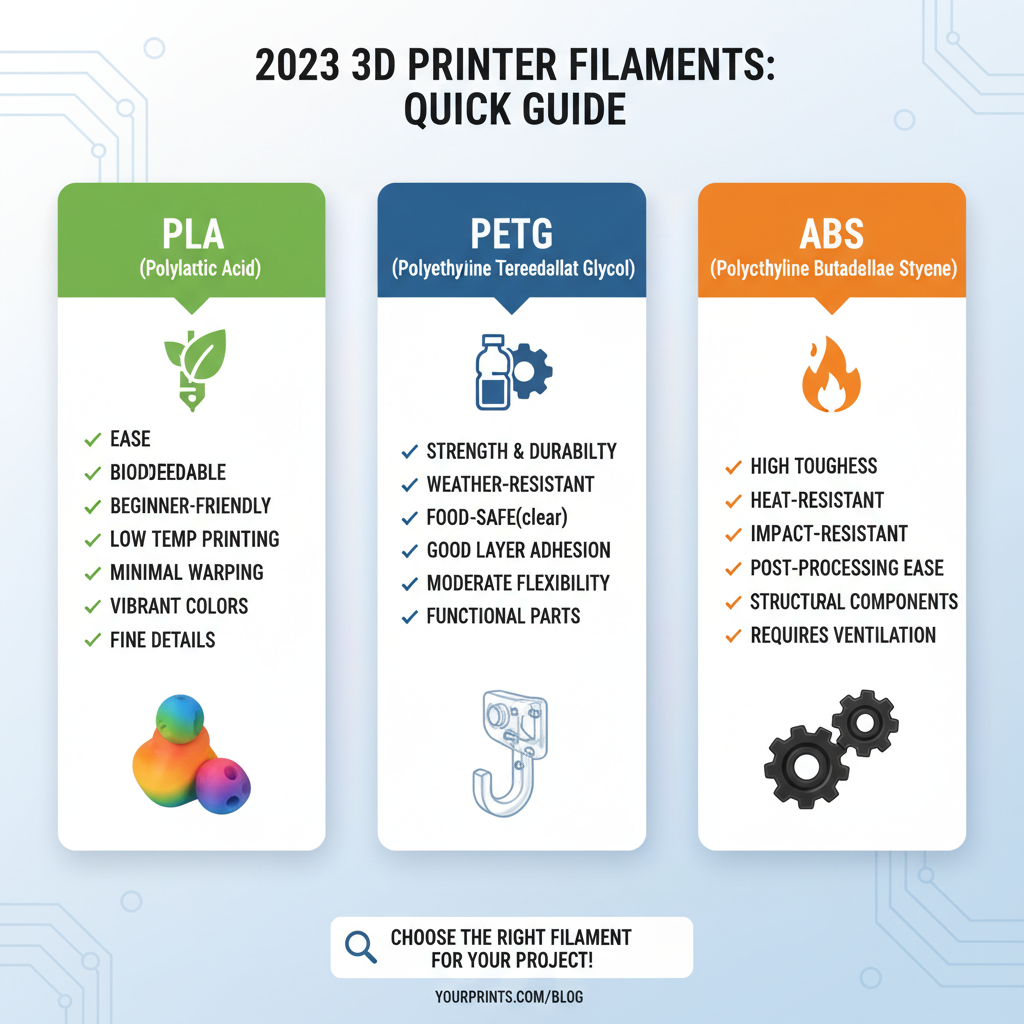
When selecting the best 3D printer filaments in 2023, understanding the properties and specific uses of various materials is essential for achieving outstanding prints. Each filament type has unique characteristics that cater to different printing needs. For instance, PLA (Polylactic Acid) is well-regarded for its ease of use and biodegradable nature, making it an excellent choice for beginners and environmentally conscious users. Its low printing temperature and minimal warping tendencies allow for smooth prints with vibrant colors and fine details.
On the other hand, ABS (Acrylonitrile Butadiene Styrene) is favored for its durability and heat resistance, making it suitable for functional parts and prototypes. However, it requires a heated print bed and proper ventilation due to the fumes emitted during printing. Other materials like PETG and TPU provide a balance between the rigidity of PLA and the flexibility of rubber-like filaments, catering to diverse applications—from functional prototypes to flexible designs. By evaluating the properties associated with each filament type, users can make informed choices to enhance their 3D printing projects effectively.
Tips for Storing and Maintaining 3D Printer Filaments
Storing and maintaining 3D printer filaments is crucial for achieving high-quality prints and prolonging filament lifespan. According to a report from 3D Printing Industry, improper storage can lead to moisture absorption, which significantly affects filament performance and can cause issues like clogging and inconsistent extrusion. To prevent these issues, it’s essential to keep filaments in airtight containers with desiccant packs. While standard plastic bags may offer some protection, specialized filament storage solutions are recommended for long-term storage, ensuring that filaments remain dry and ready to use.
Additionally, regular maintenance of stored filaments is key to optimizing print quality. A study published by the American Society of Mechanical Engineers highlights that temperature and humidity control are vital factors in filament storage. Filaments should be kept in a cool, dry environment, ideally between 15-25°C (59-77°F) and 20-40% relative humidity. Users can also implement a rotation system, using older filaments first to avoid degradation over time. Implementing these storage and maintenance tips will not only improve print quality but also enhance the overall lifespan of your 3D printer filaments.