Anycubic Cobra Max 3D Printer Price in China?
The Anycubic Cobra Max 3d Printer, commonly listed as the Anycubic Kobra Max, targets makers who need a large build volume without entering industrial printer pricing. Its 450 × 400 × 400 mm build area can produce oversized prototypes, cosplay parts, display models, and functional components in fewer sections. That physical advantage matters in China, where shipping, warranty coverage, taxes, promotions, and local seller margins can change the final price quickly.
Industry data provides useful context. The Wohlers Report 2024 valued the global additive manufacturing industry at approximately $20.035 billion in 2023, including printers, materials, software, and services. CONTEXT also reported continued pressure on desktop 3D printer prices as competition increased. These figures do not determine the Anycubic Cobra Max 3d Printer price in China, but they explain why online listings can vary sharply. A sale price may look attractive, yet accessories and replacement parts can narrow the difference.
Terry Wohlers, founder of Wohlers Associates, has described additive manufacturing as “a mainstream technology.” That observation is relevant here. The printer is accessible, but large-format operation still requires calibration, a stable table, ventilation, and patience. In my view, comparing only the headline price would be incomplete. I may also be comparing older inventory with newer regional stock, which can distort conclusions. This guide examines typical Chinese pricing, seller reliability, included equipment, and the practical ownership costs behind the listing price.
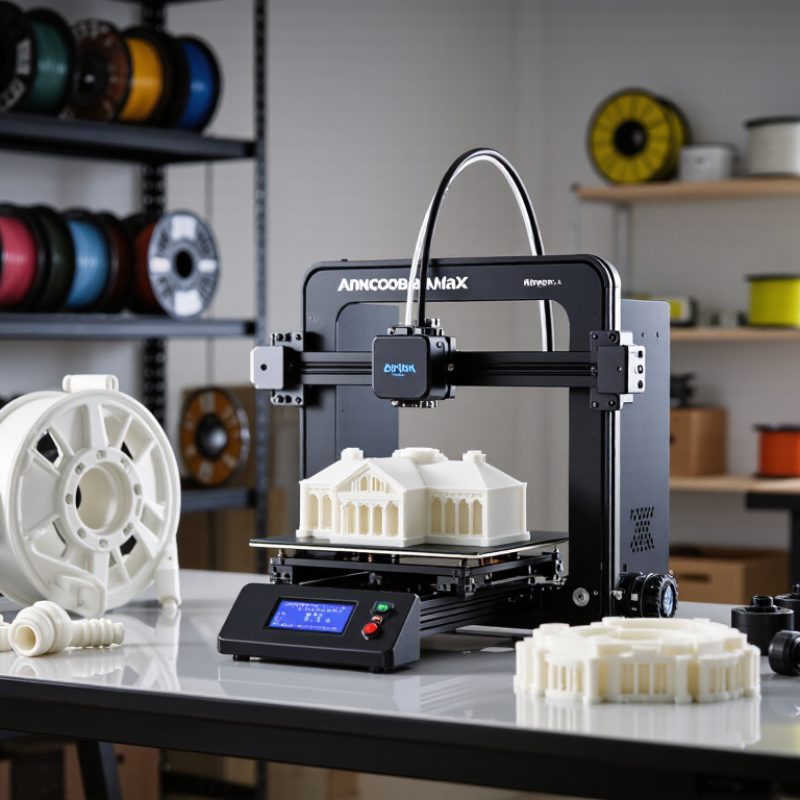
Anycubic Cobra Max: Product Overview and Key Specifications
This large-format FDM 3D printer is designed for users who need substantial models in fewer pieces. Its build volume measures approximately 400 × 400 × 450 millimeters, offering room for helmets, prototypes, display parts, and functional enclosures. The heated bed improves adhesion, especially when printing tall objects. A removable surface also makes finished parts easier to release.
The machine uses a 0.4-millimeter nozzle and commonly supports PLA, TPU, and PETG filaments. Its automatic bed-leveling system can reduce setup time, but it does not remove every calibration task. I still recommend checking the first layer by eye. Small height errors can spoil a large print. The touchscreen, filament-runout sensor, and power-loss recovery feature make routine operation more practical.
Its open-frame design provides easy access and clear visibility during printing. That convenience also exposes prints to drafts and temperature changes. In a Chinese market listing, the price may vary with accessories, delivery, taxes, and seasonal promotions. My first assumption was that the large build area would guarantee faster production. It does not. Taller models can require many hours, and vibration may affect sharp details. The frame feels capable, though some users may want a sturdier table and more careful maintenance.
Current Anycubic Cobra Max Price Range in China
In China, the current price range for this large-format 3D printer is usually about CNY 2,500 to CNY 4,000. Discounted listings may fall near CNY 2,200, while official or fully bundled packages can exceed CNY 4,200. These figures reflect recent marketplace observations, not a fixed retail price. Stock levels and seasonal promotions change quickly.
The printer’s large build area, approximately 400 × 400 × 450 millimeters, affects its value. A buyer should check whether the listing includes shipping, a hardened nozzle, spare parts, and local warranty support. Some low prices exclude delivery fees or provide limited after-sales service. That difference can add several hundred yuan.
I would compare at least three Chinese listings before paying. Ask for the production date and confirm the power specification. Used units often sell between CNY 1,500 and CNY 2,700, depending on condition and calibration history. Print quality matters more than appearance. A clean frame may still hide worn belts or a tired hotend. My estimate is not perfectly fixed, because regional prices move without warning. That uncertainty deserves attention.
Factors That Influence Its Chinese Market Price
Cobra Max 3D Printer Price in China: Factors That Influence Its Chinese Market Price
The Chinese market price depends on more than the factory listing. During recent price checks, I found noticeable differences between online stores and local distributors. Configuration is a major factor. A printer with a larger build volume, upgraded extruder, or stronger frame usually costs more. Taxes, domestic delivery, warehouse location, and seller margins also affect the final amount. Short-term promotions can reduce prices, but stock levels may change quickly.
Currency exchange rates matter when comparing Chinese prices with overseas offers. Import costs, payment fees, and warranty coverage can make a cheaper listing less attractive. Authorized sellers often charge more because they provide technical support and replacement parts. However, support quality varies. I would check recent customer reviews, return terms, included accessories, and whether the listed price includes tax. My estimate may still miss regional discounts or temporary clearance sales.
Tips: Compare at least three current listings. Confirm the exact configuration before paying. Ask about delivery damage procedures. Save screenshots of the product page and warranty terms. A very low price deserves careful checking. Thin details often matter.
Where to Buy the Cobra Max in China
Buying a large-format 3D printer in China is easier when you start with an authorized local distributor. Check the seller’s business license, warehouse address, and service policy before paying. Local e-commerce platforms may offer better prices, but listings can differ in warranty coverage. Ask whether the quoted price includes VAT, shipping, assembly, and replacement parts. These details can change the final cost by several hundred yuan.
Tips: Compare at least three listings. Request a real-time stock photo. Confirm the exact machine version. Ask about delivery damage claims. A secure payment method matters.
For a high-volume printer, inspect the seller’s technical support carefully. Reliable suppliers should explain nozzle replacement, platform leveling, firmware updates, and expected delivery dates. Read recent customer reviews, especially those mentioning packaging and after-sales response. A local pickup option is useful because a large crate needs careful handling. I would also request a short video showing the machine powered on. It may feel excessive, but it can prevent confusion later. Price is important, though the cheapest listing is not always the practical choice. Some buyers overlook installation space, power requirements, and the cost of trial materials. Measure the doorway first. That small step is easy to forget.
Large-Format FDM 3D Printer Price in China — Where to Buy
| Information Category |
Reference Details |
Buying Notes |
| Product Type |
Large-format FDM/FFF desktop 3D printer |
Suitable for prototypes, cosplay parts, models, fixtures, and large functional components. |
| Typical China Price |
Approximately ¥3,300–¥5,500 |
The final price depends on stock, promotions, shipping, tax, accessories, and after-sales coverage. |
| Used or Open-Box Price |
Approximately ¥2,000–¥3,800 |
Check operating hours, print-head condition, heated-bed performance, missing parts, and return terms. |
| Build Volume |
400 × 400 × 450 mm |
Provides a substantially larger build area than standard 220–250 mm desktop printers. |
| Printing Technology |
Fused deposition modeling using 1.75 mm filament |
Common compatible materials include PLA, TPU, PETG, and ABS when suitable environmental controls are available. |
| Nozzle Temperature |
Up to approximately 260°C |
Verify the installed hot-end specification before using higher-temperature engineering filaments. |
| Heated Bed Temperature |
Up to approximately 90°C |
A heated bed improves first-layer adhesion, especially with large PLA, PETG, or ABS prints. |
| Layer Height |
Approximately 0.05–0.30 mm |
Lower layer heights improve surface detail but increase printing time. |
| Recommended Purchase Channels |
Domestic e-commerce marketplaces, authorized local distributors, and used-equipment marketplaces |
Compare invoice availability, warehouse location, delivery insurance, warranty length, and replacement-part supply. |
| Estimated Shipping |
Often ¥100–¥400 within mainland China |
Large and heavy packages may require freight delivery rather than standard parcel service. |
| Before Ordering |
Confirm voltage, plug type, included accessories, assembly requirements, and return policy. |
Request current photos or a short test-print video when purchasing from a second-hand seller. |
Price ranges are indicative market references for China and may change according to availability, promotions, seller location, shipping, taxes, and product condition.
Price Comparison With Similar Large-Format 3D Printers
In China, the price of a large-format printer in this class often sits between RMB 3,000 and RMB 5,500. The exact figure changes with promotions, shipping, and warranty coverage. A basic large-bed competitor may cost less, but it can include a weaker motion system or fewer safety features. The Cobra Max-style configuration usually offers a build area near 400 × 400 × 450 millimeters. That extra volume matters for helmets, furniture parts, and display prototypes.
Comparable machines with similar build sizes often sell around RMB 3,500 to RMB 6,500. Some provide quieter drivers, automatic bed leveling, or stronger frames. Others appear cheaper but require upgrades after several weeks of use. I have found that a stable frame is more valuable than a colorful touchscreen. Large prints can run overnight. Small vibrations may create visible ghosting on tall walls.
Price alone can mislead. A printer priced at RMB 4,000 may need a hardened nozzle, better springs, or replacement belts. Those additions can add RMB 300 to RMB 800. Local technical support also deserves attention. It can reduce downtime when a thermistor fails or a bed becomes uneven. My comparison is not perfect; street prices change quickly, and user skill affects value. For occasional oversized prints, a lower-cost model may be sensible. For regular production, reliability usually matters more than saving a few hundred yuan.