How to Choose the Best Metal 3D Printer in 2026?
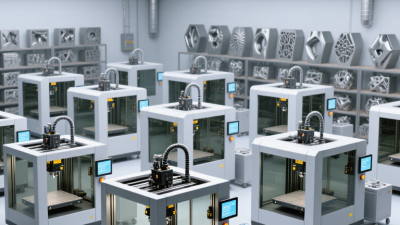
Choosing the best Metal 3D Printer in 2026 requires more than comparing build volume and purchase price. The right system must match your material, production rate, part geometry, certification needs, and operators’ experience. A 400-millimeter build chamber may look impressive, yet it can waste powder and energy for small medical components. Sometimes, a smaller platform performs better.
The Wohlers Report 2024 valued the global additive manufacturing industry at approximately $20.0 billion in 2023, following 9.1% growth. Its findings show stronger industrial adoption, especially in aerospace, healthcare, automotive, and energy. Market forecasts from MarketsandMarkets also expect metal additive manufacturing to expand significantly through 2029. These figures suggest opportunity, but they do not identify one universal machine. Data can simplify decisions. It cannot replace testing.
Industry expert Terry Wohlers has stated, “The technology is only part of the solution.” That principle remains practical in 2026. A reliable Metal 3D Printer should offer stable laser performance, repeatable layer quality, validated parameters, and accessible service support. Examine real production samples, not only polished showroom images. Ask for density results, tensile data, surface-finish measurements, and long-term maintenance records.
Look closely at the details. Powder recycling may reduce costs, but contamination control becomes critical. Automated monitoring can detect defects, although software alerts still require skilled judgment. I would not choose the fastest printer automatically. Speed without repeatability can create expensive failures. The best decision may feel less exciting. It should remain defensible after twelve months of production.
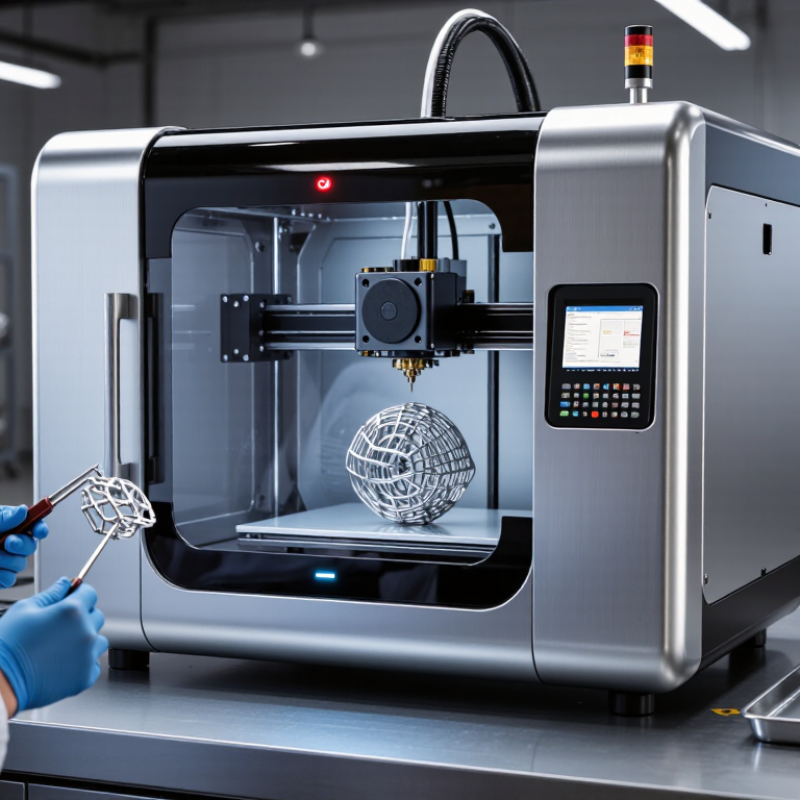
Define Metal AM Requirements: Materials, Part Size, Tolerance, and Throughput
Choosing the best metal 3D printer in 2026 starts with defining your application, not comparing machine features. Identify the material family first, such as stainless steel, aluminum, titanium, or tool steel. Each material affects powder handling, laser settings, heat treatment, and operating cost. Part size matters too. A small medical component and a 600-millimeter aerospace structure need very different build envelopes. Measure the largest realistic part, including supports and thermal distortion allowances.
Tolerance must be linked to function. A general housing may accept looser dimensions, while a sealing surface needs tighter control and post-processing. Review actual inspection data, not only brochure claims. Throughput also requires careful calculation. Consider build speed, nesting density, cooling time, powder preparation, support removal, and finishing. A fast laser does not guarantee fast delivery.
Tips:
Create three test parts before final selection. Use one thin wall, one internal channel, and one precision interface. Record dimensional drift after heat treatment. Test repeatability across multiple builds. Do not hide weak results.
A useful requirement sheet should include material, maximum part size, critical tolerances, annual volume, and acceptable failure rate. Include operator skill and facility limits. A printer may meet technical targets but still demand excessive manual work. This is where evaluations become less certain. Early estimates often underestimate cleaning time and powder waste. Leave room for revision. The best choice is usually the machine that fits the entire production workflow, not the one with the most impressive headline specification.
Match Build Volume and Resolution to Typical 20–60 μm LPBF Layers
How to Choose the Best Metal 3D Printer in 2026?
For LPBF, build volume and layer thickness should match your real production mix. Typical layers range from 20–60 μm, but thinner layers do not automatically create better parts. They often increase exposure time, powder use, and post-processing demands. A 20 μm layer may suit small aerospace channels or detailed medical components. A 60 μm layer can be more practical for larger brackets and production tooling.
Measure the parts you actually print. Then add space for support structures, thermal distortion, and powder removal. A 250 × 250 × 300 mm chamber may look sufficient, yet several parts can quickly consume its usable area. The Wohlers Report 2024 valued the global additive manufacturing industry at approximately $20.0 billion in 2023, showing why throughput now matters beside resolution. NIST research also emphasizes process monitoring and repeatability, not headline pixel size alone.
Resolution is not the whole story.
Check the manufacturer’s qualified parameter data for your target alloy. Ask for density, tensile strength, surface roughness, and dimensional accuracy at the stated layer thickness. ISO/ASTM 52900 terminology helps compare specifications consistently. I would avoid choosing the finest layer setting by default. That decision can be expensive. A better approach is matching 20–40 μm layers to detailed parts and 50–60 μm layers to larger, less intricate geometries, while validating results through test coupons and measured production runs.
Benchmark Printer Costs Against Wohlers Report 2025’s $21.9B AM Market
Choosing the best metal 3D printer in 2026 requires more than comparing purchase prices. Wohlers Associates’ 2025 report values the global additive manufacturing market at $21.9 billion. That figure includes machines, materials, software, and services. It shows market maturity, but it does not make every printer economical.
A realistic budget should include metal powder, inert gas, filters, software, installation, maintenance, and operator training. Industry purchasing data commonly places industrial metal systems from several hundred thousand dollars to over one million dollars. Smaller systems may cost less, yet their build volumes and automation can limit production. Ask for the complete ownership cost, not only the quotation.
The machine must match the work. Measure required part size, alloy range, layer thickness, production hours, and powder recovery. ISO/ASTM 52900 terminology helps teams compare specifications consistently. NIST research also stresses process monitoring and measurement control for repeatable additive manufacturing. Request sample parts with density, tensile, surface, and dimensional results.
Small details matter.
A printer producing one complex bracket may outperform a cheaper unit producing ten failed parts. I would test the full workflow for several weeks, including cleaning and inspection. This is where many evaluations become unrealistic. Energy use and downtime can quietly change the financial model. A spreadsheet should include labor and rejected parts, even when the numbers feel uncomfortable. The $21.9 billion market signals opportunity, not guaranteed return.
Verify Safety and Qualification with ISO/ASTM 52900 and 52901 Standards
How to Choose the Best Metal 3D Printer in 2026?
Start with standards, not glossy specifications. ISO/ASTM 52900 provides common additive manufacturing terms and process categories. This shared language prevents confusion during technical reviews. ISO/ASTM 52901 focuses on requirements for purchased metal parts, including documentation, quality information, and communication between buyers and suppliers. It does not automatically certify a printer as safe or qualified.
During a factory visit, inspect powder handling, ventilation, inert-gas controls, access doors, and emergency procedures. Ask for documented risk assessments, maintenance records, calibration evidence, and operator training. A serious qualification plan should define material batches, build parameters, inspection methods, and acceptance criteria. Traceability matters. Each part should connect to its powder lot, machine settings, build file, and inspection results. In practice, missing records create more uncertainty than a slightly slower build rate.
Tips:
Request the supplier’s standards matrix and compare every claim with objective evidence. Check whether test coupons represent your geometry and load conditions. Review software access, audit trails, and failure-reporting practices. Do not treat a standards reference as proof of performance. It is only a starting point. I would also repeat critical tests after installation, because transport, calibration, and local conditions can change results. A checklist helps, but it can still miss an uncomfortable detail.