How to Choose the Best Water Washable 3D Printer Resin
Choosing the right Water Washable 3d Printer Resin begins with the model’s purpose, not its label.
A detailed miniature, functional bracket, and tabletop prototype demand different material properties. Some resins emphasize sharp edges. Others offer improved toughness, flexibility, or faster curing. A resin that looks excellent in a product photo may still crack around thin walls or lose fit after washing.
Dr. Adrian Bowyer, founder of the RepRap project, said, “The important thing is not the machine, but what you make with it.” His principle remains valuable here. The printer, resin, exposure settings, washing time, and curing process work as one system.
Small details matter.
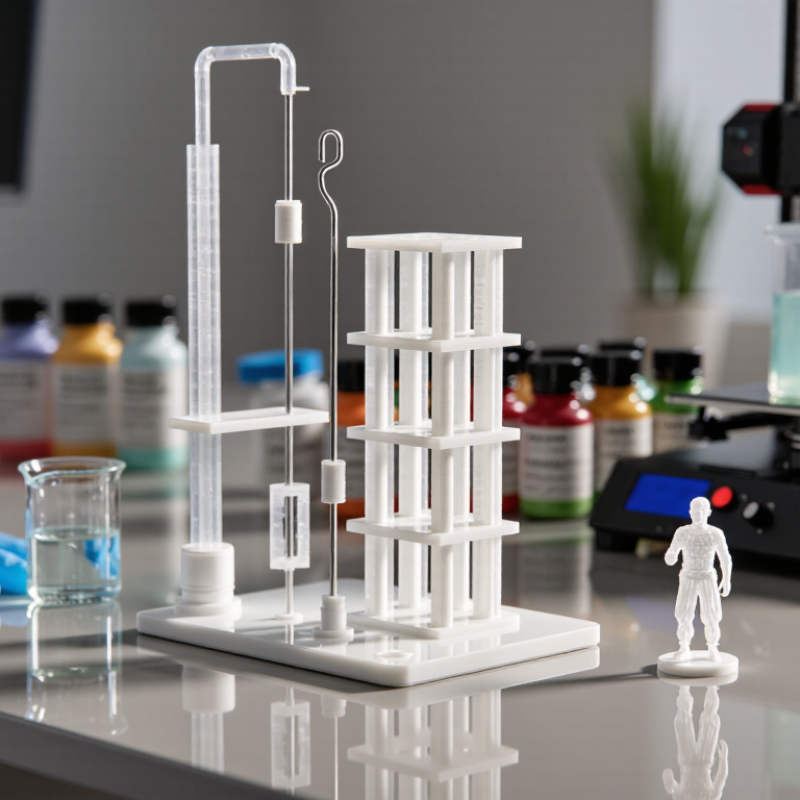
Check the resin’s recommended wavelength, exposure range, viscosity, tensile strength, and elongation data. Confirm compatibility with your printer before purchasing. Manufacturer specifications are useful, but real workshop testing reveals more. Print a calibration tower, a thin hook, and a small textured figure. Compare edge definition, surface feel, warping, and brittleness after full curing.
Water washable does not mean maintenance-free. Uncured resin still requires careful handling, ventilation, protective gloves, and responsible waste treatment. Do not pour contaminated wash water into household drains. Follow the manufacturer’s safety data and local disposal requirements.
There is no universal best formula. That answer sounds convenient, but it is incomplete. The best Water Washable 3d Printer Resin balances detail, durability, cleaning behavior, curing response, and cost for your specific workflow. Even experienced users sometimes overtrust marketing claims. Measurable testing is safer than assumptions.
Define Water-Washable Resin Requirements: 405 nm Compatibility and 0.05 mm Layers
Choosing the best water-washable 3D printer resin begins with technical compatibility, not marketing claims. Confirm that the resin is formulated for 405 nm light, the wavelength used by many desktop LCD and DLP printers. A mismatch can cause soft surfaces, weak supports, or incomplete curing.
The target layer height also matters. A 0.05 mm layer equals 50 microns, giving sharper lettering and smoother curved surfaces. However, thinner layers increase print time and may reveal calibration problems.
Wohlers Report 2024 valued the global additive manufacturing industry at $20.035 billion in 2023, showing a mature market that still requires careful material selection.
ASTM and ISO additive manufacturing standards also emphasize controlled process parameters, including exposure and layer thickness. In practice, I would print a small calibration model before starting a detailed part. I still find this step easy to skip. That is usually a mistake.
Tips:
Check the resin’s technical data sheet for its 405 nm exposure range, recommended layer settings, viscosity, and post-curing guidance. Wash prints with clean water, but replace cloudy water promptly. Measure critical features with calipers after curing. A 0.05 mm setting does not guarantee 0.05 mm accuracy. Room temperature, screen condition, support placement, and resin age can change the result. Record exposure times and failures in a simple test log.
Compare Mechanical Performance Using ASTM D638 Tensile Data and Elongation
How to Choose the Best Water Washable 3D Printer Resin
Water washable does not automatically mean mechanically reliable.
ASTM D638 tensile testing exposes that difference. In published ASTM D638 datasets for water-washable photopolymers, tensile strength commonly ranges from about
25 to 55 MPa. Elongation often remains between
5% and 20%. These figures vary with specimen orientation, layer height, washing time, and post-curing temperature.
Elongation matters when a printed part must flex, snap, or absorb impact. A resin reaching
45 MPa tensile strength but only
6% elongation may crack suddenly around a thin hinge.
Another resin reaching
32 MPa but
18% elongation can survive repeated bending more effectively.
ASTM D638 requires controlled specimen geometry and testing conditions, yet home testing rarely matches them. I once compared two resins using different curing times. The result looked scientific, but it was not truly comparable. That weakness deserves attention.
The Wohlers Report 2024 valued the global additive manufacturing industry at approximately
20.0 billion dollars in 2023, showing why material selection deserves stronger testing discipline. Still, market growth cannot predict a resin’s behavior. Request ASTM D638 data, including tensile strength, elongation at break, test speed, and post-cure details. If those details are missing, treat the number carefully.
Tips:
Print five identical specimens. Keep orientation, washing, and curing consistent. Record failures, not only averages. A small crack may reveal more than a polished datasheet.
Evaluate Viscosity, Exposure Time, and 2–3 Second Layer-Curing Benchmarks
How to Choose the Best Water Washable 3D Printer Resin
Choosing water-washable 3D printer resin requires more than reading its cleaning instructions. Viscosity strongly affects support formation, flow, and surface detail. I check the resin at 23–25°C before printing. Cold resin often moves slowly and creates uneven layers. Warm resin flows better, but excessive heat can change curing behavior. My first calibration was too optimistic. A resin that looks smooth may still trap bubbles around fine supports.
Exposure time controls how firmly each layer bonds. I test identical models at 1.8, 2.2, and 2.6 seconds. This comparison works best with consistent layer height, lift speed, and UV power. A clean 2.2-second layer is a useful starting point. It is not a universal answer. Underexposure leaves soft edges, weak supports, and incomplete holes. Overexposure can close small gaps and erase embossed letters.
I pay special attention to the 2–3 second layer-curing benchmark. At this range, I inspect a calibration plate under strong light. Fine text should remain readable, and small openings should stay open. After rinsing, I look for a sticky film or cloudy surface. The water should be changed when it becomes visibly milky. I once judged a print too quickly and missed slight warping near the base. Repeating the test after full drying revealed it. Recording viscosity, exposure time, temperature, and wash duration makes later decisions more reliable.
How to Choose the Best Water-Washable 3D Printer Resin
Compare typical viscosity levels with recommended initial exposure times. A 2–3 second exposure is a practical starting benchmark for many standard-resolution LCD/MSLA printers, but final settings depend on layer height, screen strength, resin color, and printer calibration.
Lower-viscosity resins generally flow and recoat more easily, while higher-viscosity materials may require more settling time. Begin with the manufacturer’s recommended exposure range, then validate adhesion, detail sharpness, and layer separation using a small calibration print.