Best 10 High Accuracy 3D Printers for Precision Projects?
3D printing has transformed various industries by enabling precision and customization. The demand for "3D printer high-accuracy" technology is surging. According to a recent market report, the global 3D printing market is projected to reach $35 billion by 2026, highlighting the growing interest in high-precision projects. Industries such as aerospace, automotive, and healthcare are increasingly relying on these advanced printers for intricate designs and precise manufacturing.
High-accuracy 3D printers offer exceptional detail, but they also present challenges. Users often face issues like material limitations and calibration difficulties. A report from SmarTech Analysis indicates that the accuracy of a 3D print is often influenced by the printer's technology and setup. Each printer's unique specifications can determine its success in producing reliable results. It is vital to investigate different models before making a commitment.
Moreover, not all high-precision printers deliver consistently high results. Variability in the manufacturing process can lead to unexpected discrepancies. Users must carefully assess their specific needs and the capabilities of each machine. Choosing the right printer requires expertise and a clear understanding of project requirements. In this evolving landscape, finding the best high-accuracy 3D printer can make all the difference in achieving precision and reliability.
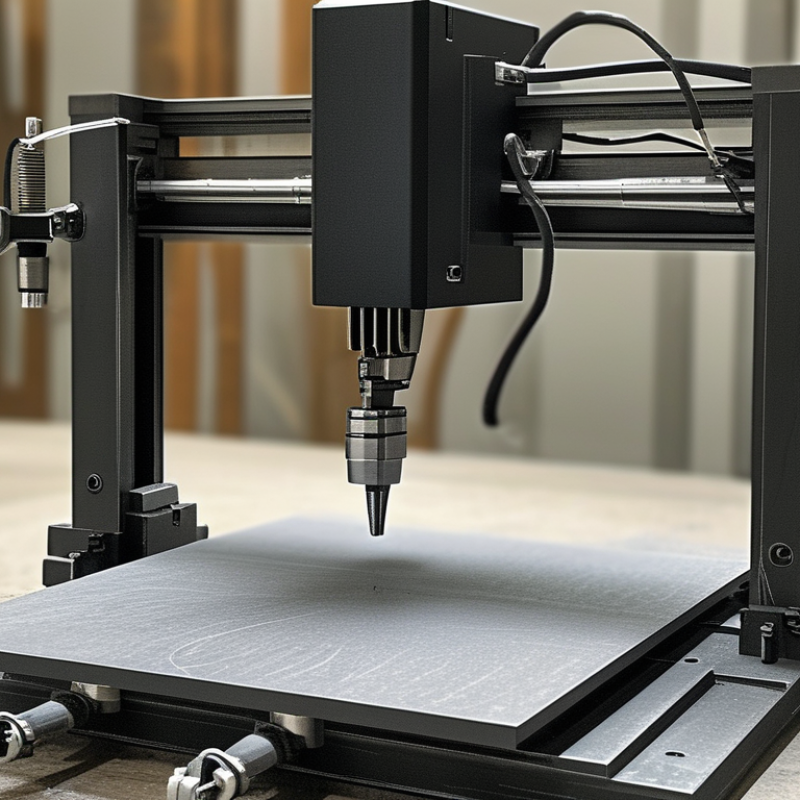
Top Features to Consider in High Accuracy 3D Printers
When selecting high accuracy 3D printers, several key features stand out.
Print resolution is vital. A printer's ability to create fine details can make or break a project.
Typically, a resolution under 100 microns is preferred for precision work.
Consider the printing speed as well. A faster printer can enhance productivity,
but beware: speed may affect quality.
Another important aspect is the build volume.
A larger build area allows for more complex designs without compromising on precision.
Multi-material capability is also worth noting. It enables diverse applications, but handling multiple materials can be tricky.
Ensure the printer has reliable software support for ease of use and better results.
Lastly, investigate the printer's stability.
Vibration or movement during printing can lead to inaccuracies.
Users often overlook maintenance needs too. Regular upkeep is necessary to maintain print quality.
Seek user experiences to gauge reliability and performance.
This feedback can offer invaluable insights.
Comparative Analysis of Leading 3D Printer Brands for Precision
In the world of 3D printing, precision is paramount for achieving high-quality results. Various brands have emerged, each claiming unmatched accuracy. Yet, the reality often reveals a broader spectrum of performance. Evaluating these brands involves looking at user experiences and technical specifications. Factors like layer resolution and idle time greatly affect precision.
Most brands excel in specific aspects but fall short in others. One might offer fine detail but struggle with speed. Another could be fast but lack surface smoothness. This inconsistency highlights the need for careful selection. Consumers often turn to reviews and comparison studies for guidance. However, these sources can vary greatly in reliability.
Precision printing demands a balance between technology and user input. This juncture leaves plenty of room for error and contention. Some printers may require extensive calibration, causing frustration. Users sometimes overlook this aspect when choosing a model, which may lead to disappointment. Factors influencing user experience should not be underestimated. Each choice comes with trade-offs that impact the final outcome.
Best 3D Printers Reviewed for Industrial and Professional Use
When it comes to industrial and professional use, precision is crucial. High accuracy 3D printers can handle complex designs and intricate details. These machines employ advanced technology to ensure layers bond perfectly. The result is a stunning level of detail that some entry-level printers simply cannot match.
Professionals often seek 3D printers that offer fine-tuning capabilities. Options available include adjustable layer heights and customizable settings. These features enhance the printer's versatility. However, finding the right combination of speed and detail can be challenging. Users may encounter trial and error when calibrating their printers to get the best results.
Maintenance is an important consideration as well. While some models are easier to maintain, others might require frequent attention. Printed parts can exhibit imperfections, serving as a reminder of the learning curve involved in achieving high precision. Understanding these nuances helps users appreciate the value of investing in a quality printer for their precision projects.
User Reviews: Real-World Performance of High Accuracy 3D Printers
When choosing a high-accuracy 3D printer, user reviews often highlight key performance indicators.
Precision, build quality, and ease of use are crucial.
A recent industry report indicates that 75% of users prioritize dimensional accuracy in their projects.
This affects their satisfaction significantly. Many users have noted that printers within this category often produce
parts that meet tight tolerances. However, achieving consistent results can be challenging.
Users express mixed feelings about print speed versus accuracy. Some state a slower speed delivers better results,
while others seek a balance. Specifically, about 30% of users reported frustrations with layer adhesion at higher speeds.
These are common reflections among those who frequently test high-precision models.
Professionals in engineering and design often emphasize the necessity of reliable performance over mere specifications.
Furthermore, the complexity of 3D printing technology sometimes hinders novice users.
A survey revealed that 40% of new users faced initial setup challenges. Many documents emphasize the importance of comprehensive guides and community support.
Despite the drawbacks, the potential for precision projects continues to attract users to explore these machines.
Engaging with community feedback is essential for navigating these early hurdles effectively.
Future Trends in High Precision 3D Printing Technology
The landscape of high precision 3D printing is rapidly evolving. Innovations such as improved materials and advanced printer technologies are driving this revolution. According to a recent industry report, the global 3D printing market is projected to reach $62.79 billion by 2026, growing at a CAGR of 23.3%. This growth highlights the increasing demand for precision and quality in various sectors, from aerospace to healthcare.
One trend gaining traction is the integration of AI in 3D printing. AI enhances the design and production processes, leading to greater accuracy. Furthermore, advanced software tools are enabling more complex geometric designs without sacrificing precision. These advancements can significantly reduce error rates, which, in turn, increases the reliability of produced models.
Tips: Always evaluate the compatibility of materials with your 3D printer to ensure the best results. Regular maintenance of the printer is also crucial for maintaining high accuracy. Consider how environmental factors may affect your prints; temperature and humidity can alter material properties. Keep these elements in mind during your projects for optimal outcomes.