Wall printing has moved beyond novelty. A well-chosen machine can turn a blank café wall, school corridor, or shop display into a detailed image without installing panels. Yet print quality depends on more than resolution. Surface texture, wall height, ink type, room conditions, and operator setup all affect the result.
This guide compares three common 3D wall printer machine types in 2026: fixed-rail systems, portable printers, and larger-format or industrial models. Each design suits different jobs. A portable unit may fit through a narrow doorway, while a rail-mounted machine can offer steadier movement across a broad wall. Industrial systems may support larger workloads, but need more space and careful planning. No type wins every time.
The search phrase “Wall Printer Machine 3d Wall” can point buyers toward many products, but specifications deserve a closer look. Check supported materials, maximum print dimensions, calibration steps, maintenance needs, and local technical support. Ask for a sample printed on a surface similar to yours. Look closely at edges, small text, and color consistency. These details tell a more useful story than a headline speed claim.
Real installations can still surprise you. A slightly uneven plaster wall may need preparation, and a printer’s advertised working range may not match a particular room layout. That is worth admitting. The sections ahead explain what each machine type does well, where it can fall short, and which practical questions help narrow a purchase decision.
Top 3D Wall Printer Machine Types in 2026
A useful way to compare 3D wall printers is by how the inkjet head moves. Rail-mounted systems travel along a vertical track, keeping the printhead steady across a wall. Mobile systems move on floor wheels and can cover wider surfaces, but uneven floors may affect alignment. Hybrid designs combine a wall guide with a mobile base. The distinction is practical: watch how the carriage behaves near corners, sockets, and textured plaster.
Print axes describe movement. A two-axis machine typically moves horizontally and vertically, while a third controlled axis can adjust nozzle distance from the wall. That extra adjustment helps on imperfect surfaces, though it adds setup complexity. One caveat: resolution figures can mislead. A stated 720 dpi does not guarantee crisp lettering if the wall absorbs ink or the head vibrates. Ask whether resolution refers to addressable dots, actual output, or a manufacturer’s test target.
Grand View Research’s 3D Printing Market Size, Share & Trends Analysis Report estimated the global 3D-printing market at USD 20.37 billion in 2023, with projected annual growth of 23.5% from 2024 to 2030. That broad market figure signals expanding adoption, not wall-printer performance. For a real comparison, inspect a test image printed at working distance: fine text, solid color blocks, and a straight vertical line reveal different faults. I would not choose on dpi alone. The wall itself is part of the machine.
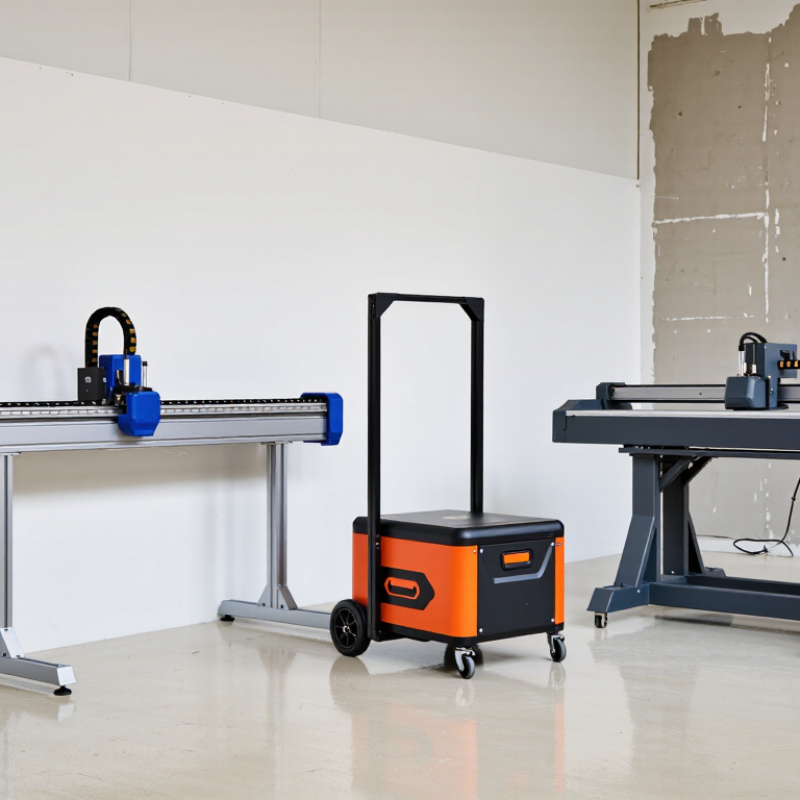
Floor-track printers run on a temporary track set parallel to the wall. Their stable base helps maintain consistent printhead distance across long, flat surfaces. Crews must level the track and keep the floor clear. Small bumps can show up as uneven lines. This type suits open interiors and repeatable wall layouts, but corners and room changes may require repositioning.
Wall-rail printers attach to a fixed or temporary rail mounted against the wall. The rail guides vertical movement, which can help on narrow sites with limited floor space. Installation takes care: uneven walls or poorly aligned rails can affect print accuracy. They are practical for repeated work on similar wall sections, though less flexible when room dimensions vary.
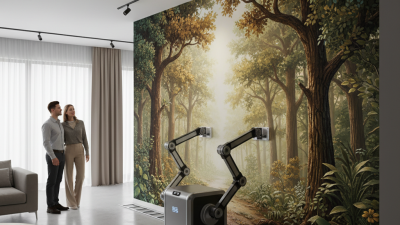
Mobile-robot printers use a wheeled platform to move between print areas. Sensors and navigation systems help the machine follow a planned path, but clutter, thresholds, and changing light can complicate setup. Not fully hands-off. The International Federation of Robotics’ World Robotics 2024 report recorded 4.28 million industrial robots operating worldwide in 2023. That figure describes industrial robotics broadly, not wall printers specifically. It signals a growing automation base, but buyers still need job-site trials. Compare track setup time, rail alignment, and navigation performance on the actual surface.
Published specifications for wall printers often list 600–1,440 dpi, but dpi alone does not predict how sharp a mural will look. Nozzle design, ink, wall texture, and print distance all affect the finished image. A smooth, sealed panel may show fine lettering clearly; a rough plaster wall can soften the same detail. Numbers need context.
Compact mobile units suit smaller rooms and jobs where repositioning matters. Rail-guided machines can keep the print head steady across wider walls. Larger vertical systems may offer greater maximum print height, but the stated limit does not always equal practical coverage. Check whether the height refers to one continuous image, and whether the machine needs clearance above the wall. Measure the actual ceiling and baseboard obstacles.
Compare speed in m²/h carefully. A published rate may describe a simple color block, not a detailed image with multiple passes. Ask what resolution and coverage were used for the speed figure. Also check whether setup, alignment, and repositioning are excluded. That comparison can be tedious. Still, it is more useful than choosing a machine by its highest number. One advertised specification may look impressive and prove irrelevant on a real job.
| Machine Type | Advertised Resolution | Advertised Print Speed | Maximum Print Height | Typical Configuration | Best Suited For |
|---|---|---|---|---|---|
| Compact Portable Wall Printer | 600–1,200 dpi | Approximately 3–6 m²/h | Approximately 2.0–2.5 m | Lightweight vertical frame designed for transport between indoor sites. | Small murals, homes, retail interiors, and spaces with limited setup area. |
| Standard Track-Mounted Wall Printer | 600–1,440 dpi | Approximately 5–10 m²/h | Approximately 3.0–4.0 m | Floor-supported track and vertical carriage; track length can often be extended for wider walls. | Interior decoration, offices, schools, and medium-sized commercial murals. |
| High-Output, Extended-Height Wall Printer | 600–1,440 dpi | Approximately 10–20 m²/h | Approximately 3.5–4.5 m | Reinforced or modular track system, commonly configured for larger print areas and longer operating sessions. | Large-format murals, commercial venues, and higher-volume wall-printing work. |
How to read these figures: These are representative ranges found in published product specifications, not standardized performance-test results. Actual speed depends on image coverage, print mode, pass count, surface condition, and setup. Maximum height and resolution vary by model and configuration; confirm the specific machine’s technical sheet before purchase.
Rail-mounted, floor-standing, and robotic 3D wall printers suit different jobs, but substrate checks should come before machine selection. Smooth, sealed drywall usually offers predictable ink transfer; porous plaster may absorb ink unevenly, while dusty concrete can weaken adhesion. Check for loose paint, moisture, repairs, and texture under strong side lighting. Small ridges matter. The Gypsum Association’s GA-214-2021 classifies gypsum-board finishes across five levels, a useful reminder that “finished wall” does not mean one consistent surface.
Measure flatness with a straightedge across several points, then compare the result with the printer’s stated tolerance. ANSI A108.02 allows no more than 1/8 inch of variation in 10 feet for tile with an edge of 15 inches or longer; this is a tile-installation benchmark, not a printer specification. Still, it helps flag risky dips and humps. A rail system needs a dependable mounting path, while a floor-standing unit needs clear floor space and a stable setup. For large areas, check wall height, width, corners, and obstacles before estimating pass time. Measure twice. A test print on the actual wall can expose absorption or alignment issues that a specification sheet misses; even careful checks leave room for surprises.
In 2026, compare 3D wall printers by usable coverage, setup time, and cost per square metre—not maximum specifications alone. Rail-mounted machines suit long, flat walls and repeated designs, but installation and alignment can take time. Portable wheeled units are easier to move between rooms and smaller sites. Gantry-style systems may cover broad, open surfaces efficiently, yet need clear floor space. Measure twice.
A machine’s advertised print width does not include corners, obstacles, or repositioning. Ask for a site test on a wall similar to yours. Record setup, calibration, and cleanup time, then estimate the cost per m² using accepted printed area. Include labor, ink, travel, maintenance, and equipment depreciation. A cheap print can become costly when preparation takes longer than expected. Even a careful estimate may miss site delays.
Tips: Compare the same design and wall area across machines. Request a written breakdown of setup and operating costs. Check how quickly the unit can be leveled and recalibrated after moving. Leave room in your budget for waste and reprints; the first calculation is rarely perfect.