How to Choose the Best Metal 3D Printer for Your Business?
In the rapidly evolving field of additive manufacturing, selecting the right Metal 3D Printer is crucial for business success. According to Dr. Alex Thompson, a leading expert in 3D printing technology, “The best Metal 3D Printer must align with your specific needs and future goals.” Companies are not just shopping for machines; they are investing in innovation.
Understanding the unique features and capabilities of different Metal 3D Printers can be overwhelming. Each model presents varying specifications, materials, and technologies. Many businesses struggle to balance cost against quality and functionality. Expert advice reveals the importance of aligning the printer with project requirements.
Moreover, companies often overlook post-processing needs. The choice of a Metal 3D Printer should not solely focus on the printing process itself. Consideration of the entire workflow is essential for efficiency. Reflecting on these factors can lead to better decision-making in a competitive market.

Understanding Your Business Needs for Metal 3D Printing
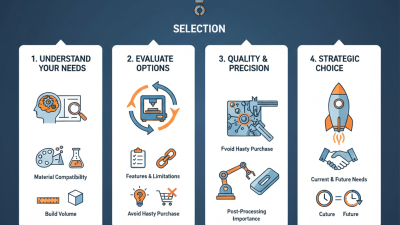
Choosing the right metal 3D printer for your business begins with understanding your specific needs. Consider the types of materials your projects require. Different printers support varying metals, which can influence the final product's quality. Analyze the complexity of your designs. Some printers handle intricate geometries better than others. This clarity on material and design needs forms the foundation for your selection.
Tips: Evaluate your production volume. A printer with high throughput may benefit a rapidly growing operation. Factor in space and budget constraints, too. Not all businesses can accommodate large machines or higher costs.
Thinking about support and maintenance is also essential. Some printers come with extensive technical support, which can help mitigate downtime. Weigh that against your team's capacity for troubleshooting. If your staff lacks expertise, a user-friendly machine becomes crucial.
Tips: Research potential vendors thoroughly. Look for user reviews and case studies. This insight helps signal their reliability and industry reputation. Remember, investing in the right equipment can significantly shape your production capabilities.
Metal 3D Printer Selection Criteria
Key Features to Consider in a Metal 3D Printer
When selecting the best metal 3D printer for your business, it’s essential to focus on key features. Material compatibility is crucial. Not all printers can process every type of metal. Look for machines that handle a variety of alloys, like titanium or stainless steel. According to a report by Wohlers Associates, the metal 3D printing market is expected to reach $6.1 billion by 2025. This growth indicates the growing importance of versatile printers.
Print speed and layer resolution impact production efficiency. A printer with high precision can create complex geometries. However, sometimes, faster printers sacrifice detail for speed. This trade-off can affect end-user satisfaction. Consider the purpose of your prints. What level of detail do you need?
Tips for success: Assess your budget against your production needs. A lower-cost printer might save money but could lead to higher post-processing costs. Also, think about the maintenance requirements of the printer. Regular upkeep is necessary to maintain print quality. Don’t overlook the learning curve associated with any new technology, as staff training can be time-consuming.
Comparing Different Metal 3D Printing Technologies
When exploring metal 3D printing technologies, understanding the various options is critical for making informed decisions. Several methods dominate the landscape, each with unique benefits and limitations. For instance, Powder Bed Fusion, particularly Selective Laser Melting (SLM), is prevalent for its precision. According to a report by SmarTech Analysis, the SLM market alone is projected to reach $1 billion by 2025. However, it requires extensive post-processing, which can slow production.
Direct Energy Deposition (DED) offers another avenue. This technology facilitates larger builds and repair applications. Data from Wohlers Associates indicates that DED systems have seen a growth rate of around 30% annually. Yet, achieving optimal layer adhesion can be challenging, and the surface finish may not meet standards for some applications.
Binder Jetting stands out for its speed and material versatility. This method is less forgiving regarding detail, often leading to compromises in mechanical properties. As the technology matures, companies must weigh these factors. The right choice hinges on application needs, material selection, and production scalability. The fast-evolving nature of the industry demands ongoing evaluation and adaptation.
Evaluating the Cost and ROI of Metal 3D Printers
When evaluating the cost and ROI of metal 3D printers, businesses must consider several factors. Initial investment can be significant. However, production efficiency can lead to long-term savings. Assessing the break-even point is crucial. This involves calculating how long it will take to recover the initial cost through reduced manufacturing expenses.
Tips: Analyze all potential costs. Include maintenance, materials, and training. Consider future scalability as part of your ROI analysis. A machine that fits today may need to adapt later.
Another aspect is the productivity rate. Understand how many parts you can produce in a given timeframe. This can affect your overall profitability. However, it’s important to recognize that not all parts will yield the same return. Evaluate the potential demand for your specific applications.
Tips: Gather data from similar implementations. Look at case studies or talk to industry experts. This provides insights into real-world performance and challenges. Be prepared for the learning curve associated with new technology. Adjust expectations as your team becomes more proficient.
Researching Manufacturer Reputation and Support Services
When choosing a metal 3D printer for your business, reputation is paramount. A manufacturer's history reveals their reliability. Look at reviews from other companies. These insights can help gauge performance and support. A strong track record often means better machinery.
Support services play a critical role. Fast response times can reduce downtime in production. Technical assistance should be readily available. Evaluate their customer service options. Are they willing to troubleshoot problems quickly? A manufacturer should not only sell a printer but also foster a long-term partnership.
It's important to consider user experiences meticulously. Reach out to current users and ask about their challenges. This will give you a fuller picture of what to expect. Remember, no manufacturer is flawless. Even the best may have shortcomings. Evaluating potential gaps helps ensure a more informed decision.